
Introduction
Yes, anyone can make UGC.
And I know that sounds like one of those “motivational internet answers”… but it’s actually true.
The biggest reason people think they can’t do UGC is because they mix it up with being an influencer. And that’s where the confusion starts.
Here’s the simple difference:
- UGC creator = you make content for brands
- Influencer = you post content to your audience
So if you’ve ever thought “I’d love to do this, but I don’t have followers” — good news: you don’t need them. Brands aren’t paying you for your follower count. They’re paying you because you can create content that looks natural, feels real, and helps people actually understand the product.
And honestly… if you’ve been on Reddit in any UGC thread, you’ve probably seen the same thing repeated over and over:
“UGC is a content job, not a popularity contest.”
This guide is for you if you’re starting from zero and want a clear path forward.
Here’s what you’ll learn:
- what UGC really is (without the buzzwords)
- how to start even with no experience
- what brands actually look for when hiring UGC creators
- and how to land your first opportunities without feeling fake or salesy
Let’s break it down in a way that makes it feel doable — because it is.
What “UGC” Actually Means (And Why People Overthink It)
UGC stands for User-Generated Content.
But in 2026, when creators say “I do UGC,” they usually mean this:
👉 You create short-form content that brands can use for ads, TikTok, Reels, or product pages.
Think:
- product demos
- unboxings
- “3 reasons I love this” style videos
- voiceovers + b-roll
- testimonials
And the key part is this:
You don’t need to post it.
The brand posts it (or runs it as an ad).
That’s why UGC is such a good entry point. It’s not about being famous — it’s about being useful.
On Reddit, you’ll see beginners say things like:
“I thought UGC was only for influencers… turns out brands just need content that converts.”
Exactly.
UGC is basically content creation as a skill, not social media popularity as a game.
Next, let’s answer the real question:
Can literally anyone do it?
So… Can Anyone Make UGC?
Yes. Literally anyone can start.
Not “anyone can become the next top creator overnight”… but anyone can create UGC if they can do one of these:
- explain something simply
- film a product in good lighting
- speak naturally (or use a voiceover)
- follow a basic structure
That’s it.
Most beginner UGC isn’t cinematic. It’s not fancy. It’s just clear.
And honestly, the creators who win aren’t always the most “talented.”
They’re usually the ones who are consistent and easy to work with.
You’ll see people say this in creator communities all the time:
“Brands want content creators, not content perfectionists.”
Who is UGC perfect for?
UGC is a great fit if you:
- don’t want to be an influencer
- don’t want to chase followers
- want a realistic way to start making money with content
- like the idea of working with brands, but without the pressure of posting
Next up: what brands actually look for (and spoiler: it’s not your follower count).
What Brands Look For in UGC Creators (It’s Not Fame)
Brands are not scrolling your profile thinking:
“Wow… 10k followers, amazing.”
They’re thinking:
“Can this person make content that feels real and sells?”
Here’s what they actually care about:
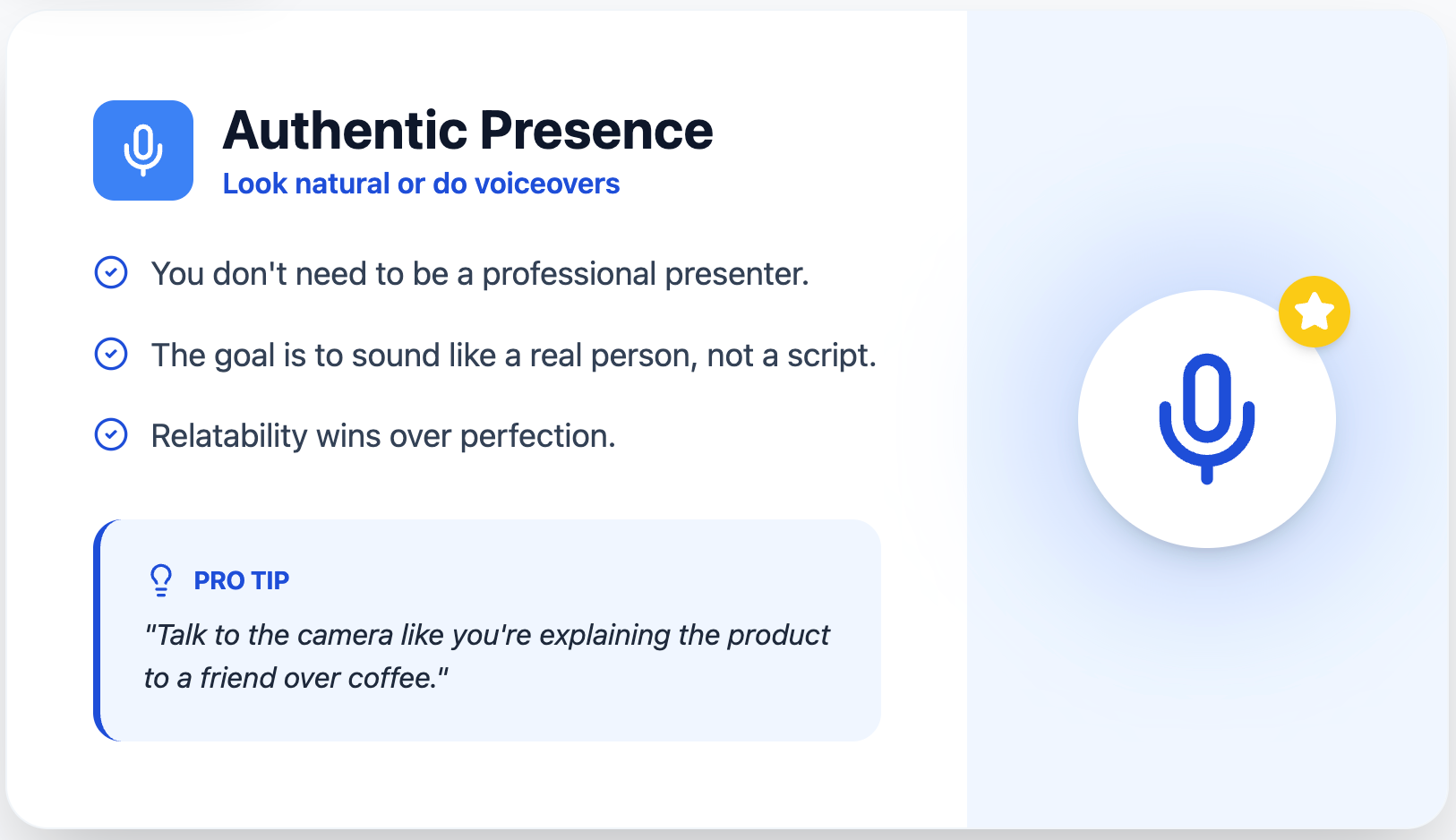
1) You look natural on camera (or you can do voiceovers)
You don’t need to be a presenter.
You just need to sound like a real person.
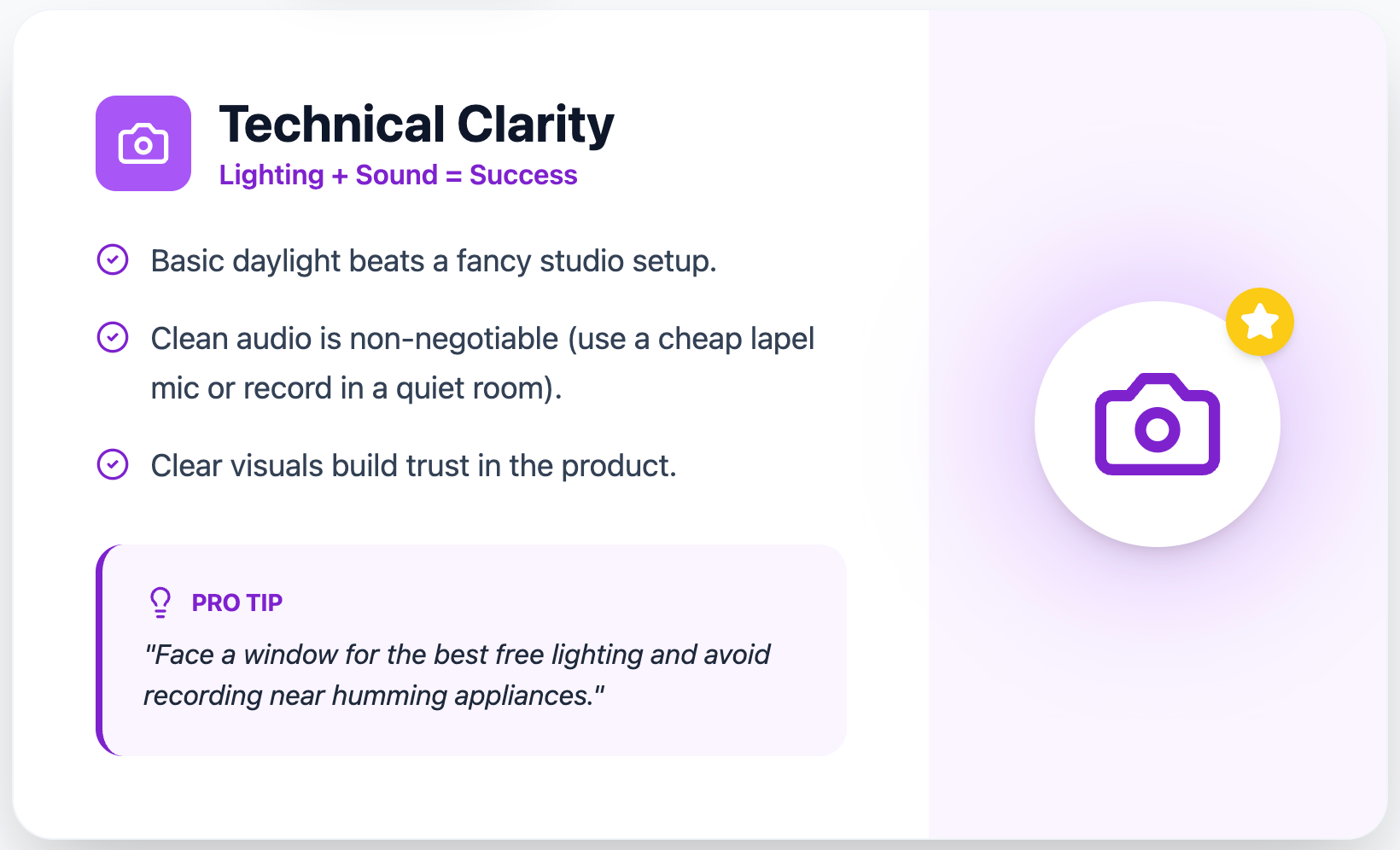
2) The video is clear (lighting + sound)
Basic daylight + clean audio beats fancy editing every time.
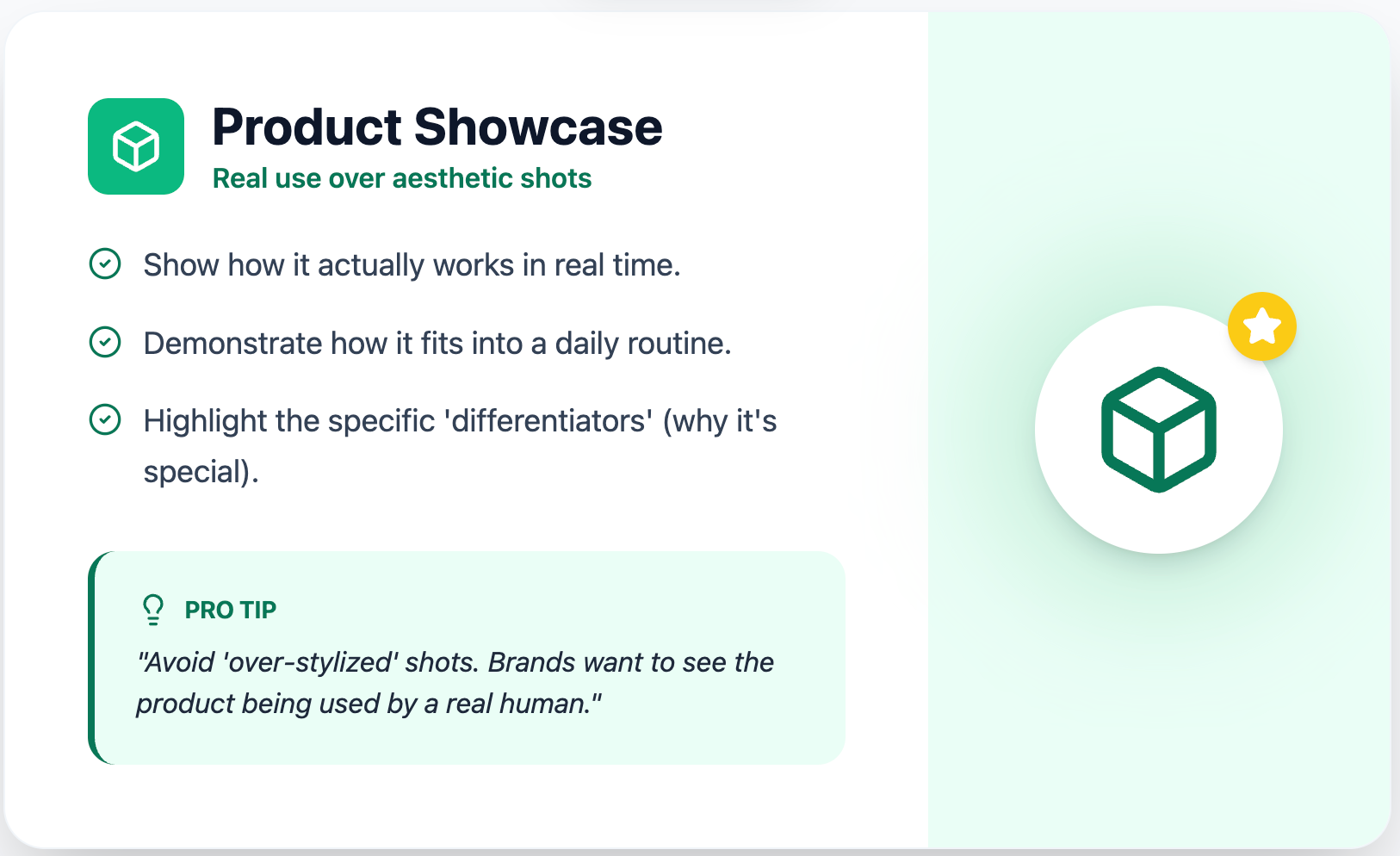
3) You can show the product properly
Not just aesthetic shots — real use:
- how it works
- how it fits in daily life
- what makes it different
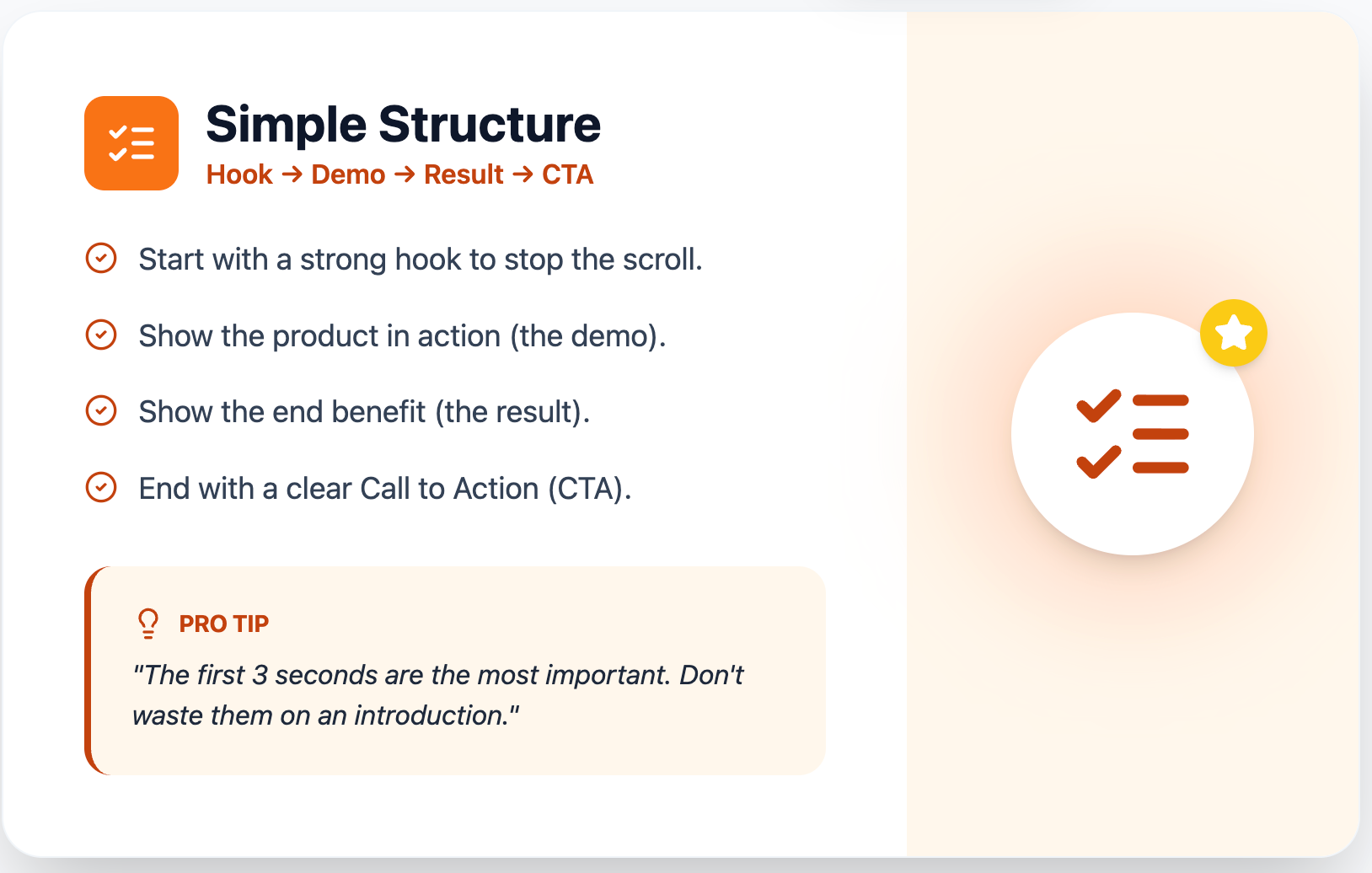
4) You can follow a simple structure
Brands love creators who can do:
Hook → demo → result → CTA
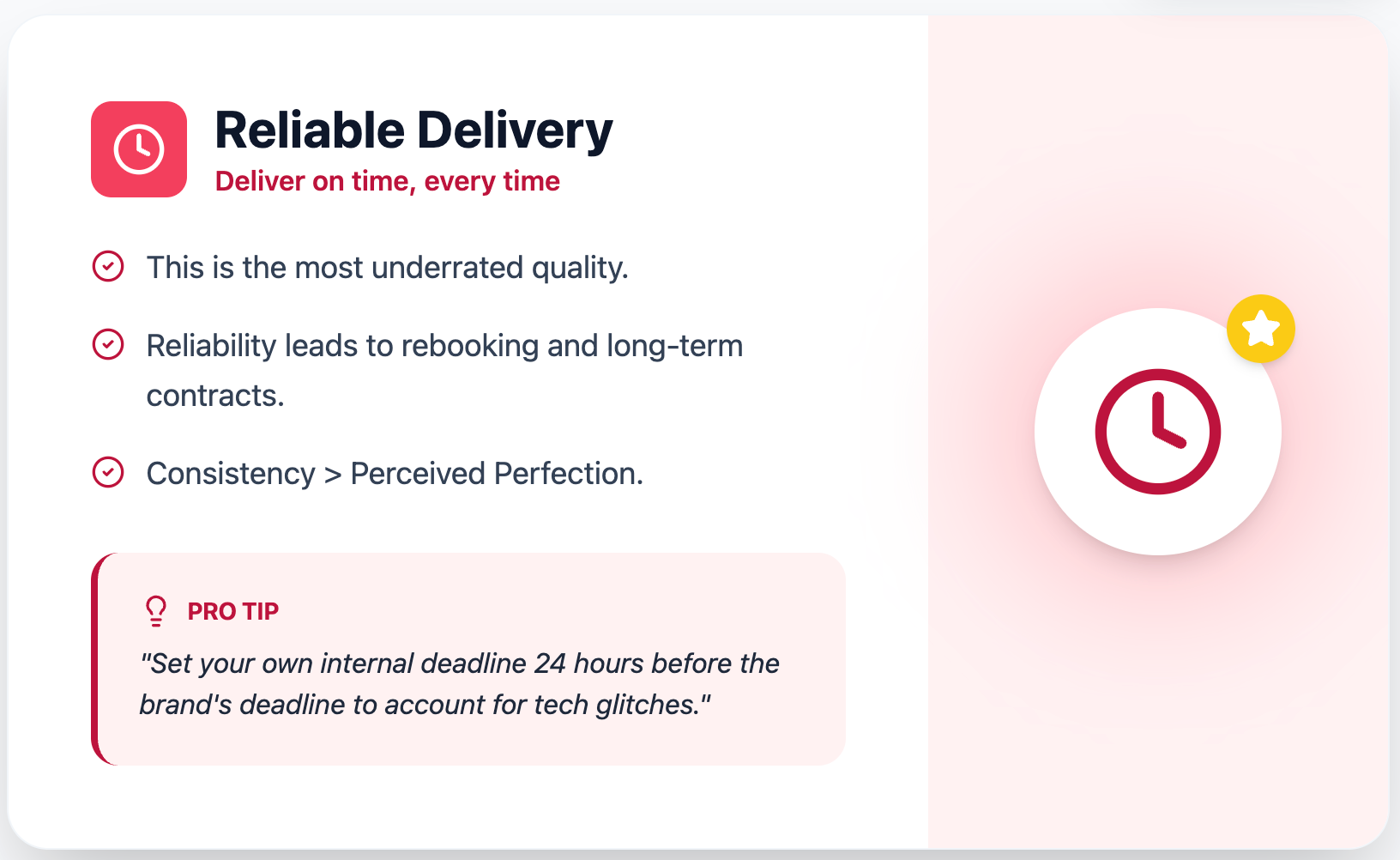
5) You deliver on time
This one is underrated, but it’s huge.
Reliable creators get rebooked.
You’ll even see brands say it in threads like:
“We don’t need perfect videos. We need creators who deliver consistently.”
Do You Need Followers to Do UGC?
Nope. Zero followers is fine.
Because UGC is a service: you’re getting paid to create content, not to “influence” your audience.
So even if your TikTok has 12 followers and your Instagram is basically just friends… you can still land UGC work.
Why follower count doesn’t matter
Brands use your content for:
- their own socials
- paid ads
- product pages
- email marketing
They’re paying for the video, not your reach.
When followers do help (optional)
Followers only matter if the brand wants a “post on your page” deal too.
That’s a different category:
✅ UGC + posting = influencer campaign
But for pure UGC creation?
You’re good without them.
What Types of UGC Can Beginners Create?
If you’re new, don’t start with “creative concepts” or cinematic edits.
Start with formats brands already use every day — because they’re simple and they work.
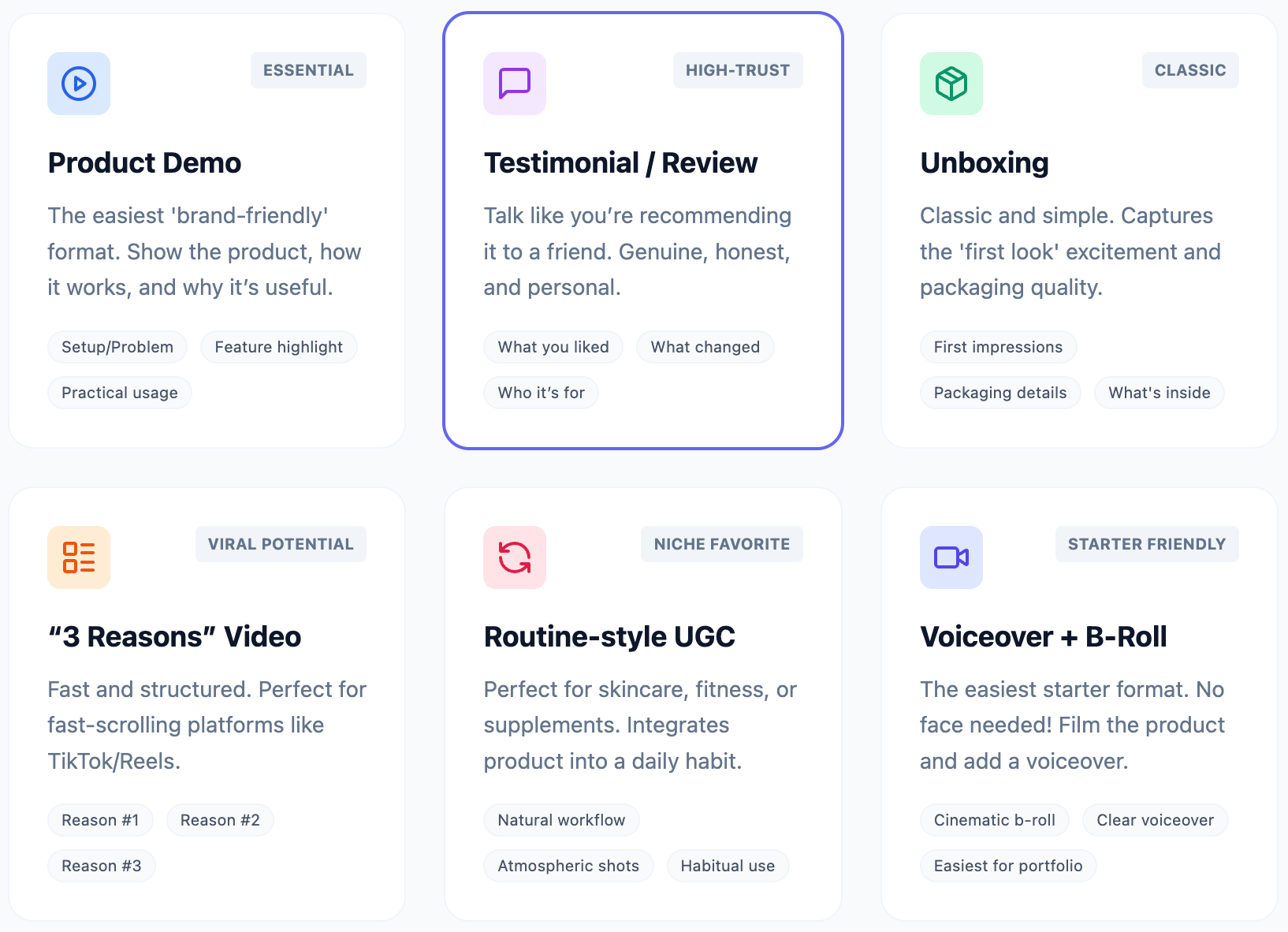
Here are beginner-friendly UGC types:
✅ Product demo (the easiest “brand-friendly” format)
Show the product, how it works, and why it’s useful.
✅ Testimonial / review
Talk like you’re recommending it to a friend:
- what you liked
- what changed
- who it’s for
✅ Unboxing
Classic, simple, always useful for brands.
✅ “3 reasons” video
Fast and structured:
- Reason #1
- Reason #2
- Reason #3
✅ Routine-style UGC
Perfect for niches like skincare, haircare, fitness, supplements.
✅ Voiceover + b-roll (the easiest starter format)
No face needed.
Just film the product + add a voiceover.
This is why people on Reddit always say:
“Start with b-roll + voiceover. It’s the easiest way to get your first portfolio.”
How to Start Making UGC With No Experience
If you’re starting from zero, you’re not behind. You’re actually in the most common position. Most UGC creators don’t start with a brand deal, they start with a phone, a product they already own, and a few practice videos.
The key thing to understand is this: brands don’t hire you because you want to do UGC. They hire you because you can prove you can create content that looks natural and clear.
So first, pick one direction. Not forever, just for now. If your content is all over the place (skincare today, tech tomorrow, food next week), brands don’t know what to do with you. But if your portfolio has a clear vibe, you look instantly more “hireable.”
Next, create a few sample videos using things you already have at home. No need to wait for a brand to send you products. Film a simple product demo, a mini review, or a “how I use this” routine. Keep it clean, casual, and realistic. You’re not trying to be perfect, you’re trying to be believable.
Then put those videos in one simple portfolio link. Don’t overthink it. A clean page with 5–10 videos is enough. A brand should be able to open it, watch your work in 30 seconds, and immediately understand what you can deliver.
Finally, make your life easier by using one simple structure when you talk: Hook → Demo → Result. That’s already “UGC” in its simplest form. If you can do that clearly, you’re ready to start applying and pitching.
Where to Find UGC Jobs (Even as a Beginner)
Once you have a few sample videos and a portfolio link, the whole game changes. You stop feeling like you’re “trying to become a creator” and you start operating like someone who offers a service.
And that’s the mindset shift that gets you paid.
The easiest way to find beginner-friendly UGC work is through platforms that already connect creators with brands. Instead of cold pitching 100 companies and hoping someone replies, you apply to opportunities that already exist. It’s faster, cleaner, and you can learn what brands want by seeing real briefs.
That said, direct outreach can still work really well, especially with smaller brands that are active on Instagram or TikTok and are already reposting customer videos. You don’t need a fancy pitch. Most brands just want someone who can reliably create good content.
A simple message like this is enough:
“Hey! I’m a UGC creator and I’d love to create a few short videos for your product. Here’s my portfolio link, if you want, I can send 2–3 content ideas that would fit your brand.”
That’s it. No cringe. No long essay. Just clear and confident.
And yes… a lot of creators still get their first UGC deals exactly like that. You’ll even see people on Reddit saying the same thing:
“My first paid UGC gig came from a simple DM and a portfolio link.”
Because brands don’t need you to be perfect. They need you to be easy to work with and able to deliver content that looks real.
How Much Can Beginners Make With UGC?
This is the part everyone wants to know, and the honest answer is: it depends, but it’s absolutely realistic to start earning from UGC pretty quickly once you have a portfolio.
Most beginners don’t start with crazy rates. Your first goal isn’t to “charge premium.” Your first goal is to get reps, build proof, and become someone brands trust.
A common beginner path looks like this:
You land your first small deal.
You deliver clean content on time.
The brand likes it… and suddenly you’re not “trying to be a UGC creator” anymore, you are one.
From there, pricing grows naturally as your content gets better and your delivery becomes smoother.
What affects your UGC price (the real stuff)
Brands aren’t only paying for the time it takes you to film. They’re paying for what they can do with your content.
That’s why 2 creators can charge very different amounts for the same “30-second video.”
Your rate usually increases based on things like:
- how good your delivery is on camera (or how clean your voiceover is)
- how strong your lighting + product shots look
- how fast you can deliver (without rushing quality)
- if the brand wants usage rights (ads) vs just organic posting
- if they want raw footage included
- if you’re making a bundle (3–5 videos) instead of 1
Also: brands love bundles.
Not because they’re cheap, but because they can test more angles and creatives.
So instead of thinking “I need one perfect video,” think:
“I can deliver 3 different variations of the same product.”
That’s what makes you valuable.
Mistakes That Stop People From Getting UGC Deals (Even If They’re Good)
A lot of creators assume they’re not getting UGC deals because they’re not “pretty enough,” not confident enough, or don’t have the right gear.
But most of the time, it’s something simpler.
The first big mistake is waiting for permission. People sit around thinking, “I’ll start when I get a brand deal.” But brands want to see what you can do before they pay you. That’s why sample content matters so much. If you don’t have a portfolio, you’re basically asking a brand to take a blind risk.
Another common mistake is trying too hard to look like an influencer. UGC isn’t about aesthetic perfection. It’s about clarity. Brands don’t need you to act like a celebrity — they need content that feels like a real person explaining a product in a way that makes sense.
A lot of beginners also make content that starts too slow. They film a beautiful intro… and the first 3 seconds have no point. On TikTok and Reels, that kills performance. Even if the rest of the video is good, the hook matters more than most people think.
And finally, one underrated issue: creators make it hard to hire them. No portfolio link. No email. No clear examples. Or the brand has to scroll forever to figure out what the creator actually offers. The easier you are to understand and book, the faster you start getting opportunities.
You’ll see this exact advice repeated everywhere:
“Your content doesn’t have to be perfect. Your process has to be simple.”
What If You’re Shy or Don’t Want to Show Your Face?
You can still do UGC. 100%.
A lot of beginners assume UGC means talking to the camera like a full-time influencer. It doesn’t. Brands mainly want content that shows the product clearly and feels natural — and you can do that without ever showing your face.
The easiest way to start is hands-only content. You film the product in use, show the key moments (opening it, applying it, using it, the result), and keep it simple. If you want to add personality, you can do a voiceover on top. That’s one of the most common formats brands use for ads anyway.
Text overlays also work really well. You can structure the whole video with just on-screen text: the hook, the benefit, the mini-demo, and a simple CTA. This is a great option if you’re still building confidence on camera.
That said… face content usually pays more, and it often performs better, especially for products that need trust (skincare, haircare, wellness, anything where “social proof” matters). Seeing a real person using something makes it easier for viewers to believe it.
But the important part is this: you don’t need to start with face content. You can build your portfolio without it, land your first deals, and then decide later if you want to show up on camera more.
Table of contents
- Introduction
- So… Can Anyone Make UGC?
- What Brands Look For in UGC Creators (It’s Not Fame)
- Do You Need Followers to Do UGC?
- What Types of UGC Can Beginners Create?
- How to Start Making UGC With No Experience
- Where to Find UGC Jobs (Even as a Beginner)
- How Much Can Beginners Make With UGC?
- Mistakes That Stop People From Getting UGC Deals (Even If They’re Good)
- What If You’re Shy or Don’t Want to Show Your Face?
Table of contents
- Introduction
- So… Can Anyone Make UGC?
- What Brands Look For in UGC Creators (It’s Not Fame)
- Do You Need Followers to Do UGC?
- What Types of UGC Can Beginners Create?
- How to Start Making UGC With No Experience
- Where to Find UGC Jobs (Even as a Beginner)
- How Much Can Beginners Make With UGC?
- Mistakes That Stop People From Getting UGC Deals (Even If They’re Good)
- What If You’re Shy or Don’t Want to Show Your Face?