

Introduction
UGC ads work because they don’t feel like ads.
They look like real content, the kind of video you’d actually stop for while scrolling TikTok or Instagram Reels. Not because the lighting is “perfect”… but because it feels familiar. Like someone is genuinely sharing something that helped them.
And that’s exactly why UGC is winning right now.
But here’s the part most people don’t talk about enough: UGC ads don’t perform because they’re random. They perform because they follow patterns. The best creators aren’t just “good on camera.” They’re good at structure.
That structure is the script.
A good UGC script makes the whole process faster. You don’t waste time wondering how to start the video, what to say next, or how to land the CTA. You already have the skeleton, and you just customize it to the product, the audience, and the vibe.
That’s why most winning UGC ads look different… but feel the same.
They hook you quickly, give you the main benefit fast, show proof, and make the next step obvious. And once you learn those templates, you can write a testimonial video script, a problem/solution script, or a product demo script in minutes.
This article gives you exactly that.
A set of UGC script templates for 5 ad types, including the hooks, the structure, and examples you can reuse again and again, whether you’re a creator building your portfolio, or a brand trying to test more ad creatives without burning time (and budget).
What Makes a UGC Script Actually Good?
A good UGC script isn’t the most creative thing you’ve ever written. It’s the one that makes people stop scrolling and instantly understand what’s in it for them. That’s it. Most “bad” UGC ads don’t fail because the creator isn’t talented, they fail because the script tries to do too much, says nothing clearly, or takes too long to get to the point.
The first thing that separates a strong script from an average one is the hook. And no, the hook isn’t the first sentence of your video. It’s the first one or two seconds, the moment the viewer decides if they care or not. That’s why the best hooks feel like someone interrupted your scroll with something real: a frustration, a bold claim, a relatable moment, or a quick result. If the opening feels like “Hi guys…” or “Today I’m going to show you…”, you’ve already lost half the audience.
After the hook, the script needs one job: deliver one clear message. Not three. Not five benefits. Not a full product breakdown. Just one main idea that the viewer can repeat back in their head without thinking. The strongest UGC ads are simple on purpose. They don’t confuse the viewer. They take one problem, one solution, one result, and make it feel obvious.
Another big difference is the language. Great UGC scripts don’t sound like marketing. They sound like a person talking to a friend. That means shorter sentences, normal words, and a tone that feels human. If the script starts sounding like a landing page (“This revolutionary formula provides…”) the whole thing becomes fake instantly. People don’t reject ads because they’re ads, they reject ads because they feel like they’re being sold to. A good script feels like a recommendation, not a pitch.
And finally, every solid UGC script ends with a simple CTA. Not some dramatic “buy now before it’s too late” thing. Just a clean, easy next step: try it, check it out, click the link, grab it while it’s available, see the options. The CTA should feel like the natural ending of the story, not a random marketing line taped on at the end.
The goal of a UGC script isn’t to sound impressive. It’s to make someone watch, understand, and act, without thinking too hard. That’s when UGC becomes scalable, fast, and repeatable.
Before You Start: The UGC Script Formula (Copy/Paste)
If you’ve ever stared at a blank page thinking “what do I even say?” this is the fix.
Most UGC ads that perform well follow the same simple flow. Not because creators are lazy… but because this format works. It feels natural, it moves fast, and it makes the viewer understand the product without needing to “sell” too hard.
Here’s the UGC formula you can copy/paste and reuse for almost any product:
Hook → Relatable problem → Product moment → Proof → CTA
It’s basically: grab attention, show a real-life pain point, introduce the product like a solution, add something believable, then tell them what to do next.
And the best part?
You can swap the hook + proof and the script becomes a totally different ad.
1) Testimonial UGC Script Templates
Testimonial-style UGC is one of the safest formats to start with because it’s built on trust.
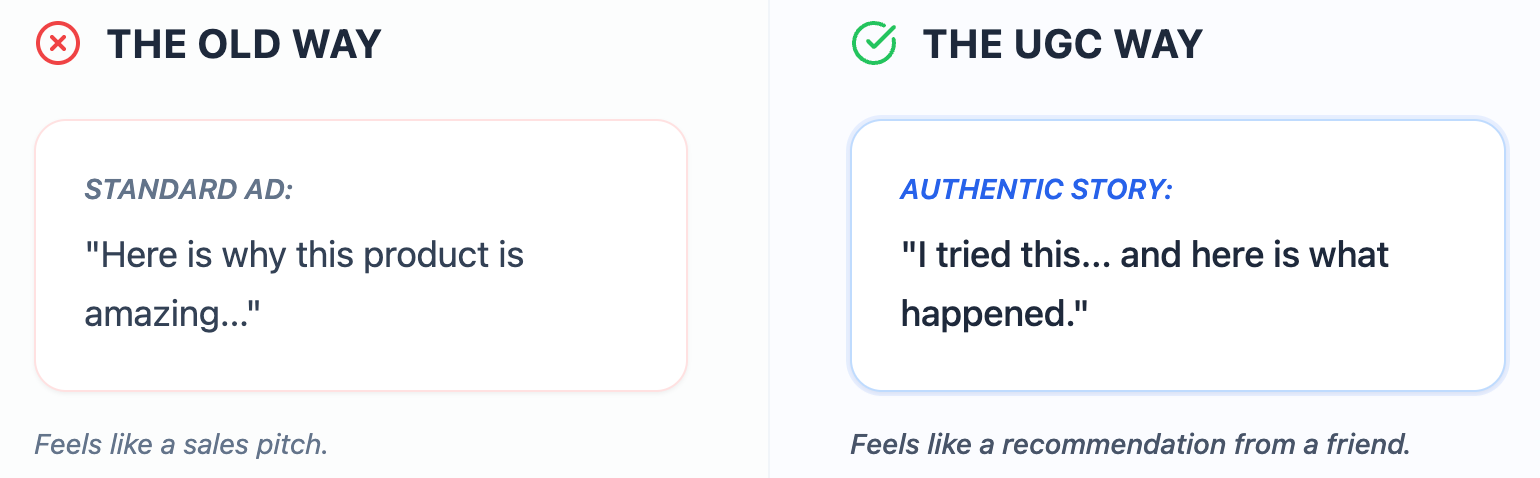
This format works best when:
- the product has visible results (skin, hair, fitness, tools, home stuff)
- the brand wants more social proof content
- you want something that sounds natural and not scripted
- you’re trying to build trust fast
The key to great testimonial ads is simple:
make it feel like a real person talking, not a commercial reading.
Below are 3 plug-and-play scripts you can use instantly.
Template 1: “I didn’t expect this to work…”
This one is perfect when you want the viewer to think:
“Wait… why didn’t you expect it to work?”
It’s curiosity + honesty in one hook.
Full Script:
HOOK (0–2s):
“Okay… I didn’t expect this to work, but I’m actually shocked.”
RELATABLE PROBLEM:
“I’ve tried so many [products for X] and most of them are either overhyped, annoying to use, or I forget about them after two days.”
PRODUCT MOMENT:
“But this is [product name], and it’s been the easiest thing to add into my routine.”
PROOF:
“After [time frame], I noticed [result 1] and [result 2]. And the biggest surprise? [unexpected benefit].”
CLOSING / CTA:
“If you’ve been thinking about trying something for [pain point], just try this one. I’ll link it here.”
✅ Works best when you can say something specific like:
- “after 7 days”
- “after my second use”
- “after a week” Even if it’s a small improvement, it feels real.
Template 2: “3 things I noticed after using this”
This is a clean one because it turns into a mini list without sounding like a sales pitch. It’s structured, fast, and easy to follow.
Full Script:
HOOK (0–2s):
“I’ve been using this for [time], and here are the 3 things I noticed immediately.”
RELATABLE PROBLEM:
“I got it because I was struggling with [pain point], and honestly I didn’t want another product that just sits in a drawer.”
PRODUCT MOMENT:
“This is [product name], and this is how I use it: [quick demo / action].”
PROOF (3 quick points):
“One: [result/benefit #1].
Two: [result/benefit #2].
Three: [result/benefit #3].”
CTA:
“If you’re dealing with [pain point], this makes it so much easier. It’s linked here.”
✅ Best tip: keep the “3 things” super simple, like:
- “it takes 30 seconds”
- “it doesn’t feel sticky”
- “I actually remember to use it”
Those tiny “real person” details are what sells.
Template 3: “If you’re on the fence…”
This one works extremely well for products people hesitate to buy because they’re unsure if it’s worth it.
It’s basically a direct message to the viewer.
Full Script:
HOOK (0–2s):
“If you’re on the fence about getting this, here’s what you need to know.”
RELATABLE PROBLEM:
“I was the same. I kept looking at it, reading reviews, and thinking ‘is this actually going to do anything?’”
PRODUCT MOMENT:
“But I finally tried it, and this is what it looks like / how it works: [quick show].”
PROOF:
“The reason I kept using it is because [main benefit].
And honestly, the biggest difference was [result / feeling].”
CTA:
“So yeah, if you’ve been thinking about it, I’d say it’s worth trying. Check the link and see if it fits what you need.”
✅ This script is gold for:
- beauty / skincare
- hair growth products
- subscription products
- anything that feels like a “maybe later” purchase
2) Problem/Solution UGC Script Templates
If testimonial ads build trust, problem/solution ads drive action.
This is the most common UGC format for a reason: it matches how people think when they’re scrolling.
They’re not watching ads because they’re bored, they’re watching because something hits:
“Wait… that’s literally my problem.”
The second the viewer feels seen, you’ve got them. And then the product doesn’t feel like an “ad”… it feels like the answer.
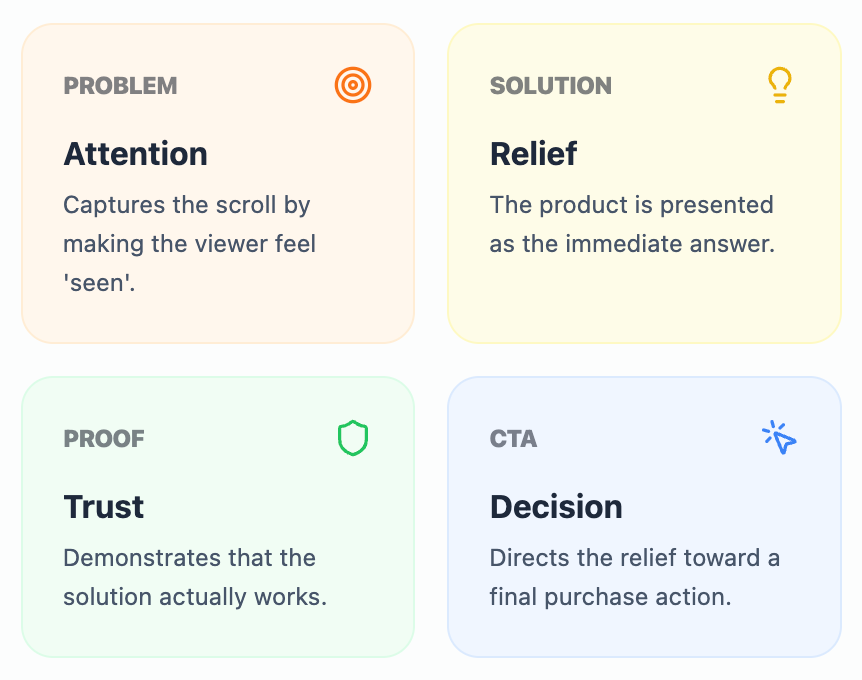
This format converts really well because it’s fast, clear, and direct:
- Problem = attention
- Solution = relief
- Proof = trust
- CTA = decision
Below are 3 scripts you can copy/paste.
Template 1: “If you struggle with ___, try this”
This one is simple, punchy, and perfect for almost any product. It works best when the pain point is obvious and common.
Full Script:
HOOK (0–2s):
“If you struggle with [problem], you need to try this.”
RELATABLE PROBLEM:
“I swear I’ve dealt with [problem] for so long, and nothing I tried actually made it easier.”
PRODUCT MOMENT:
“But this is [product name], and it’s literally made [task] so much simpler.”
PROOF:
“The best part is [benefit #1], and also [benefit #2].
Like… I noticed a difference after [time frame].”
CTA:
“If you want [result] without [pain], this is the one. It’s linked right here.”
Examples of “problem” placeholders:
- frizzy hair
- acne breakouts
- low energy in the morning
- messy kitchen storage
- bloating after meals
- dry skin in winter
Template 2: “I finally fixed ___”
This one is more emotional and satisfying. It feels like a mini win story, and people love watching those.
Full Script:
HOOK (0–2s):
“I finally fixed [problem]… and I wish I found this sooner.”
RELATABLE PROBLEM:
“I was dealing with [problem] for [how long], and it was one of those things that annoyed me every single day.”
PRODUCT MOMENT:
“Then I started using [product name], and this is how I use it: [show quick usage].”
PROOF:
“After [time frame], I noticed [result].
And the biggest difference is [specific improvement].”
CTA:
“If you’ve been dealing with [problem], don’t overthink it. Try this.”
✅ This works best if you can add one super real detail like:
“it stopped me from redoing it twice a day” / “I don’t need makeup to cover it anymore” / “I don’t dread mornings now”
Template 3: “Here’s what no one tells you about ___”
This is the “spicy” version of problem/solution. It’s not negative for the sake of it, it’s honest, and it builds authority fast.
The viewer thinks: “Wait… what don’t I know?”
Full Script:
HOOK (0–2s):
“Here’s what no one tells you about [problem/topic]…”
TRUTH BOMB / RELATABLE PROBLEM:
“Most people think you need [common solution], but honestly? That’s not what actually helps.”
PRODUCT MOMENT:
“What made the difference for me was [product name], because it focuses on [real need].”
PROOF:
“I noticed [result] after [time frame], and it’s been way easier to stay consistent with it.”
CTA:
“If you’ve been stuck with [problem], try this approach instead. Link is right here.”
✅ This one works insanely well for:
- skincare myths
- fitness misconceptions
- productivity tools
- supplements
- anything with “common advice” people are tired of hearing
3) Demo UGC Script Templates
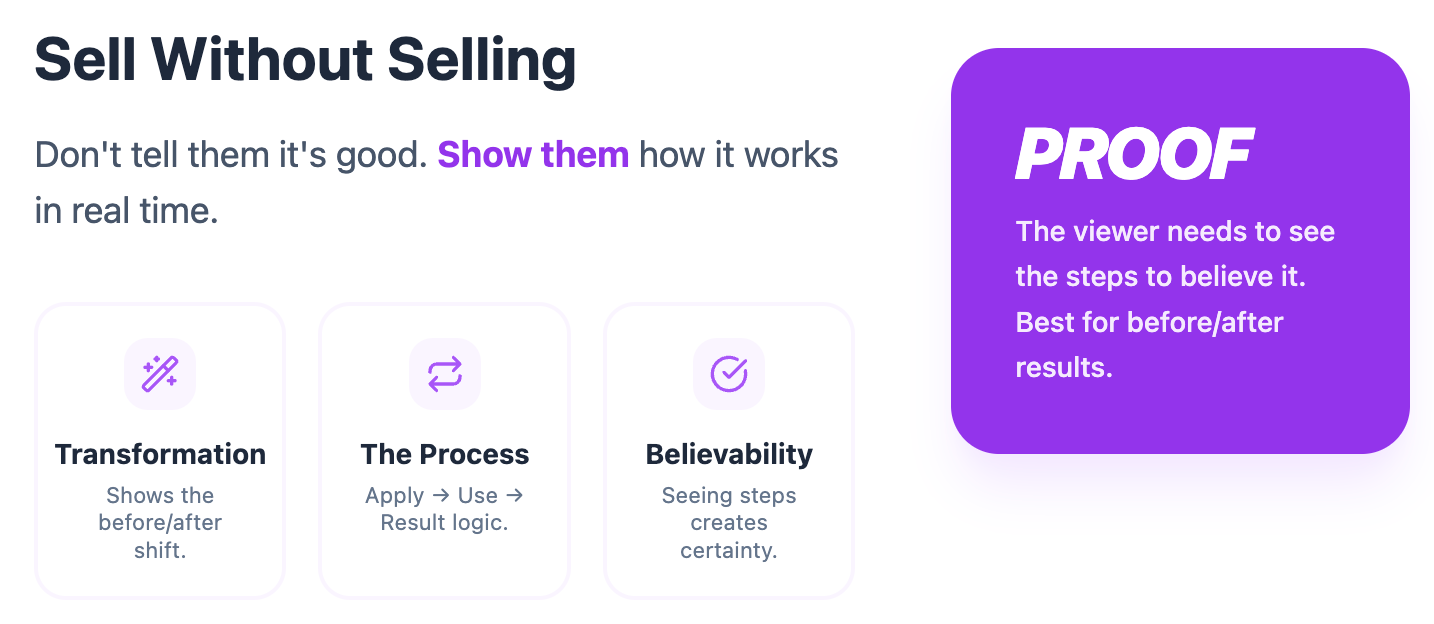
Demo scripts are the easiest way to “sell without selling.”
Because instead of telling people the product is good… you’re literally showing them how it works, in real time.
This format works best when:
- the product has a visible transformation (before/after)
- there’s a process (apply → use → result)
- the viewer needs to see the steps to believe it
Also: demo videos feel natural, they don’t need acting skills, and they’re super brand-friendly.
Here are 3 demo scripts you can copy/paste.
Template 1: “Let me show you how I use this”
This is the most universal demo format. Calm, clean, and easy.
Full Script:
HOOK (0–2s):
“Let me show you how I use [product name] because it’s honestly so good.”
SETUP (quick context):
“I started using this because [problem / goal].”
DEMO STEPS (show while talking):
“Step one: [action]
Step two: [action]
And then I just [action].”
PROOF / BENEFIT:
“The reason I love it is because [benefit #1], and it also [benefit #2].”
CTA:
“If you want [result] without the hassle, I’d 100% recommend it.”
✅ Works best for: skincare, makeup, hair tools, apps, kitchen products, fitness products.
Template 2: “Watch this before you buy ___”
This one is a scroll-stopper because it feels like a warning (but in a helpful way).
Full Script:
HOOK (0–2s):
“Watch this before you buy [product type].”
WHY (quick reason):
“Most of them are either [common issue] or they just don’t [do the thing] properly.”
DEMO MOMENT:
“This one is [product name], and this is what it does: [show feature/result].”
PROOF (keep it real):
“I’ve used it for [time frame] and the biggest difference is [specific result].”
CTA:
“If you’re thinking about getting one, start with this. It’s worth it.”
✅ Works best for: tech, gadgets, supplements, tools, home products, anything with “cheap versions” online.
Template 3: “This is the fastest way to ___”
This is an action-based demo. The hook is a shortcut, which people love.
Full Script:
HOOK (0–2s):
“This is the fastest way to [desired outcome].”
RELATABLE MOMENT:
“I used to [pain point] and it took forever.”
DEMO (show it happening):
“Now I just do this: [step 1], then [step 2], and that’s it.”
PROOF / RESULT:
“It saves me [time/effort], and the result is [benefit].”
CTA:
“If you want this to be easier, try [product name]. I’m obsessed.”
✅ Works best for: time-saving products, routines, cleaning, cooking, productivity, hair styling.
4) Comparison UGC Script Templates
Comparison scripts are cheat codes for conversion because they instantly answer what people are already thinking:
“Okay… but is this actually better than what I’m using right now?”
This format works best when:
- the product replaces something people already use (apps, razors, skincare, tools, services)
- there are cheaper alternatives (Amazon versions, drugstore versions, random brands)
- the brand has a clear edge (speed, quality, taste, comfort, results)
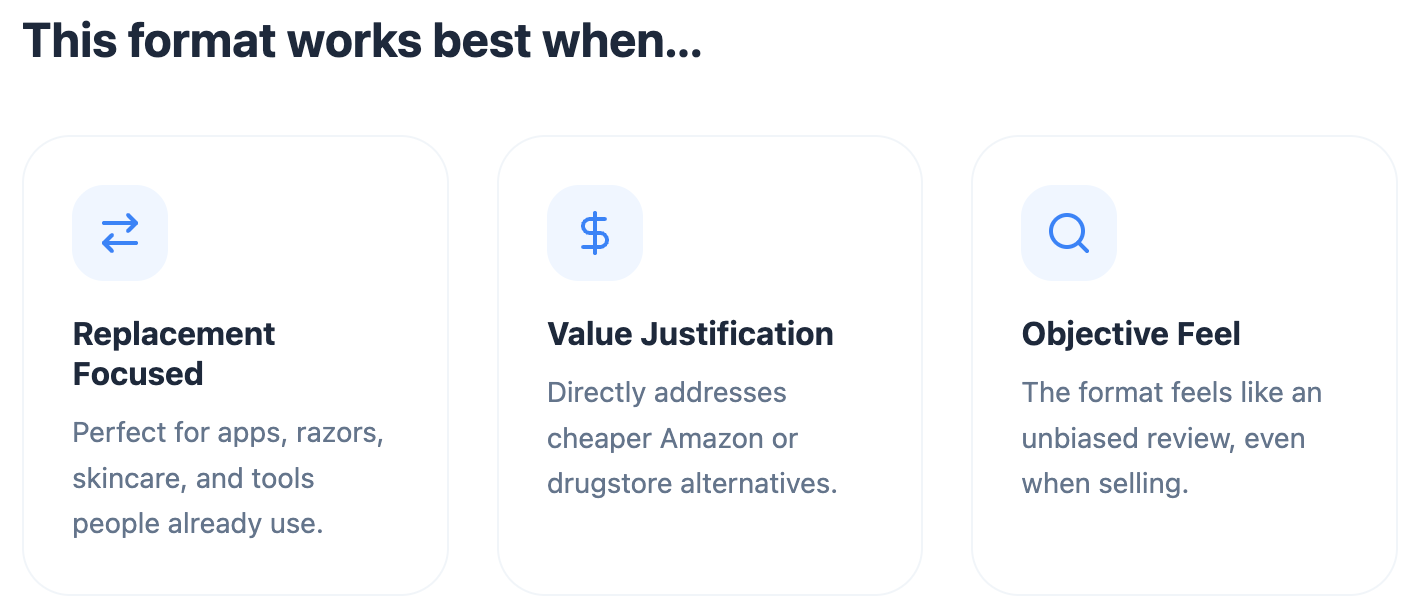
And the best part: comparison videos feel objective, even when they’re selling.
Here are 3 copy/paste templates:
Template 1: “I tried both… here’s the difference”
This is the most natural comparison format. It doesn’t feel like an ad, it feels like a review.
Full Script:
HOOK (0–2s):
“I tried [product A] vs [product B] and the difference is actually crazy.”
SETUP (context):
“I was using [old option] for [time], but I kept dealing with [problem].”
SIDE-BY-SIDE (simple points):
“This one (A) is [pro], but it’s also [con].
This one (B) is [pro], and the biggest difference is [main advantage].”
PROOF / RESULT:
“After [time], I noticed [result].”
CTA:
“If you’re deciding between the two, I’d go with [winner] for [reason].”
✅ Works best for: skincare, hair tools, apps, supplements, subscription products.
Template 2: “The old way vs the new way”
This one is super clean because it doesn’t even need two brands, it can be old routine vs new routine.
Full Script:
HOOK (0–2s):
“This is the difference between the old way and the new way…”
OLD WAY (relatable pain):
“Before, I had to [annoying process], and it was always [frustration].”
NEW WAY (introduce product):
“Now I just use [product name] and it literally [main benefit].”
QUICK SHOW:
“Look how easy this is: [show steps].”
RESULT / BENEFIT:
“It takes [time], and the result is [outcome].”
CTA:
“If you’re still doing it the old way, try this once and you’ll get it.”
✅ Works best for: cleaning, kitchen, productivity, fitness, routines, parenting hacks.
Template 3: “Don’t buy ___ until you see this”
This is the most “direct response” comparison style. A little spicy, but it performs.
Full Script:
HOOK (0–2s):
“Don’t buy [common product] until you see this.”
CALL OUT THE PROBLEM:
“Most of them [common issue], and you end up wasting money.”
SHOW THE BETTER OPTION:
“This is [product name], and it actually [unique feature/result].”
DEMO / PROOF:
“Here’s what it looks like when you use it: [show it].
And this is the result: [show outcome].”
CTA:
“If you want the version that actually works, this is the one.”
5) Founder-Style UGC Script Templates (Founder POV)
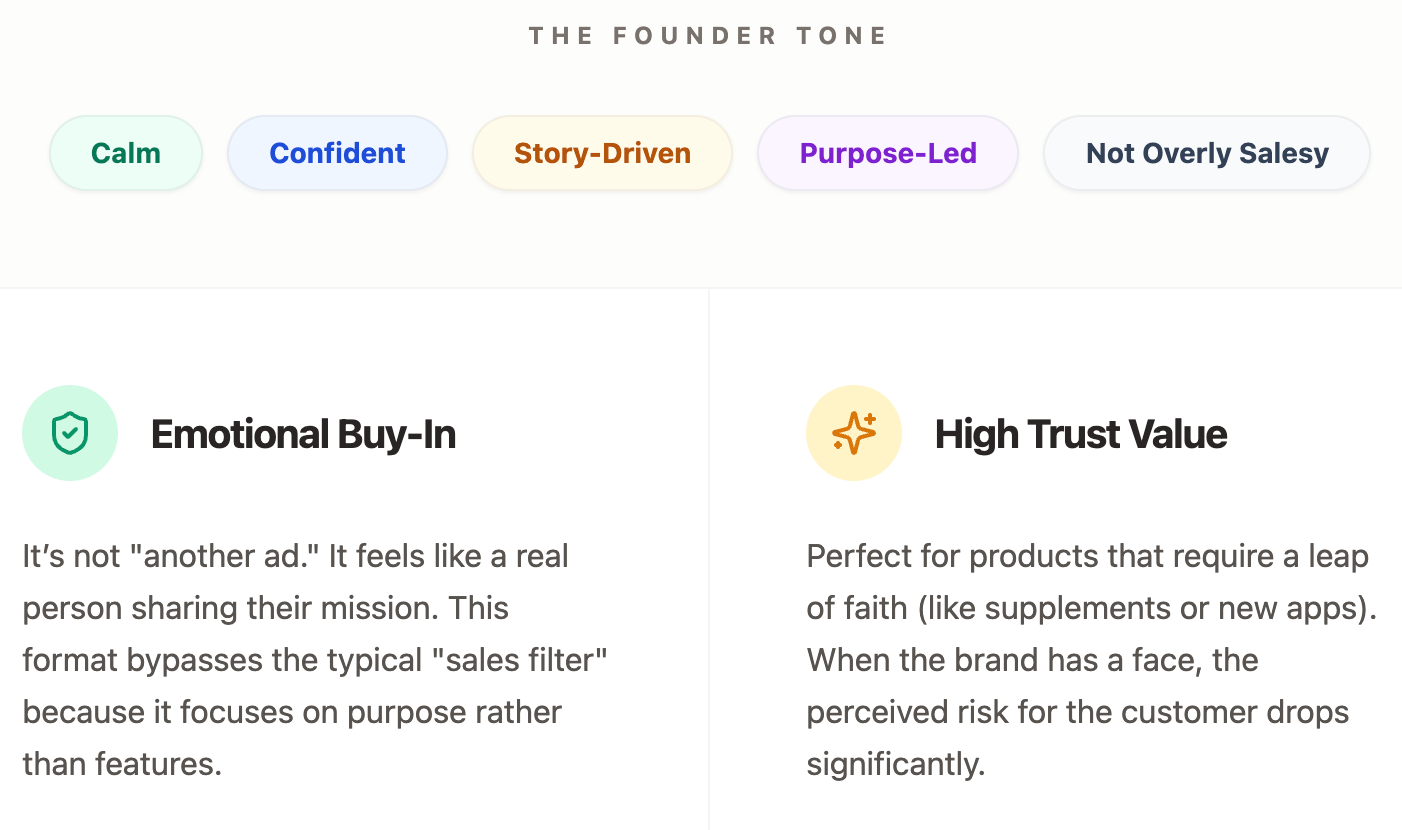
Founder-style UGC works because it feels like a real person behind the brand is speaking.
It’s not “another ad.”
It’s more like:
“Hey, I built this for a reason… and here’s why it matters.”
Even if the creator isn’t the founder, the video still performs insanely well when it’s written in that founder tone:
- calm
- confident
- story-driven
- purpose-led
- not overly salesy
This style is perfect for:
- skincare, wellness, supplements
- DTC brands with a mission
- apps/tools with a “why” behind them
- anything that needs trust + emotional buy-in
Here are 3 plug-and-play templates:
Template 1: “I made this because I was tired of ___”
This is the classic “founder origin story” format. Super human, very believable.
Full Script:
HOOK (0–2s):
“I made this because I was tired of [problem].”
THE REAL STORY:
“I tried everything… and honestly, most of it was either [issue #1] or [issue #2].
And I kept thinking: there has to be something better.”
THE PRODUCT MOMENT:
“So I created [product name] to do one thing really well: [main outcome].”
WHAT MAKES IT DIFFERENT:
“It’s [feature/ingredient/material], and it’s designed for people who want [benefit].”
CTA:
“If you’ve been struggling with [problem], this was literally made for you.”
✅ Works best for: skincare, haircare, supplements, personal care, “problem-first” brands.
Template 2: “If you’re new here, this is what we do”
This one is clean, simple, and feels like a brand intro video, very polished.
Full Script:
HOOK (0–2s):
“If you’re new here, this is what we do, and why people love it.”
WHO IT’S FOR:
“This is [brand/product name], made for people who want [desired result] without [common frustration].”
THE SIMPLE EXPLANATION:
“It works like this: [simple how it works].”
PROOF / CREDIBILITY:
“We’ve had people say things like: [quick result line].
And that’s exactly why we built it this way.”
CTA:
“If you want [result], start with [product] and you’ll feel the difference fast.”
✅ Works best for: subscription products, apps/tools, everyday essentials, “simple = better” brands.
Template 3: “This is what we fixed that others don’t”
This is a strong one because it feels bold, but still rational.
Full Script:
HOOK (0–2s):
“Most [product category] brands get this wrong.”
THE PROBLEM (call-out):
“They focus on [surface-level feature], but ignore [real customer pain].
That’s why people end up with [bad result].”
THE SOLUTION:
“So we built [product name] to fix it.”
THE DIFFERENCE:
“You get [benefit #1], [benefit #2], and [benefit #3] — without the usual [negative].”
CTA:
“If you’ve tried [alternatives] and nothing worked… this is the upgrade.”
✅ Works best for: tech, tools, functional products, anything with a “better design” angle.
How to Pick the Right UGC Script Template
If you’re not sure which script to use, don’t overthink it.
The easiest way to choose is by asking one simple question:
What does the viewer need most to believe right now?
If they don’t trust the product yet, go with a Testimonial script.
If they already feel the pain and want a fix, Problem/Solution wins almost every time.
If the product is new, confusing, or needs to be shown, use a Demo script.
If they’re stuck between options, a Comparison script can push them over the line.
And if your brand has a story, a bigger mission, or something different behind it, founder-style scripts are perfect for building long-term trust.
Most brands don’t need “the perfect script.”
They need the right format for the right moment.
How to Make These Scripts Sound Natural (Not Like a Sales Robot)
Even the best script will flop if it sounds like someone is reading off a teleprompter.
The secret is simple: don’t write like a marketer. Write like a person.
When you’re filming, imagine you’re explaining something to a friend who asked:
“Wait… is this actually worth it?”
That’s the tone. Real words. Real reactions. Short sentences.
Also, don’t try to fit everything into one video. Most UGC ads fall apart because the creator tries to squeeze in every feature, every benefit, and every use case at once. The strongest scripts are usually focused on one clear transformation.
One pain. One shift. One result.
Your Next Step (If You Want These to Actually Convert)
Here’s the part most creators skip:
Don’t just write one script and film it once.
If you want performance, you want options.
Take one product and test:
- 2–3 different hooks
- 2 different angles (ex: emotional vs practical)
- 2 different CTAs (soft vs direct)
That’s how brands find winners. And it’s how creators get rebooked.
Because when a brand sees you can create variations fast, you’re no longer “just a creator.”
You’re a repeatable growth asset.
Final Tip: Save These Templates and Build Your Own Library
Over time, the real advantage isn’t having 5 templates.
It’s having your own swipe file that fits your style and your voice.
Once you’ve written 10–15 scripts like this, you’ll stop needing inspiration.
You’ll just know what works.
And when a brand sends a brief last minute, you’ll be able to deliver fast without stress.
Want Even Easier UGC Scripts?
If you want to speed this whole process up, Clip makes it simple to generate UGC scripts faster, test different angles, and build better performing ads without overthinking every line.
Use the templates above, customize them with your own tone, and you’ll instantly look more professional, even if you’re still new.
Because at the end of the day, the script doesn’t need to be perfect.
It just needs to sound real… and get the viewer to stay long enough to care.
Table of contents
- Introduction
- What Makes a UGC Script Actually Good?
- Before You Start: The UGC Script Formula (Copy/Paste)
- 1) Testimonial UGC Script Templates
- 2) Problem/Solution UGC Script Templates
- 3) Demo UGC Script Templates
- 4) Comparison UGC Script Templates
- 5) Founder-Style UGC Script Templates (Founder POV)
- How to Pick the Right UGC Script Template
- How to Make These Scripts Sound Natural (Not Like a Sales Robot)
- Your Next Step (If You Want These to Actually Convert)
- Final Tip: Save These Templates and Build Your Own Library
- Want Even Easier UGC Scripts?
Table of contents
- Introduction
- What Makes a UGC Script Actually Good?
- Before You Start: The UGC Script Formula (Copy/Paste)
- 1) Testimonial UGC Script Templates
- 2) Problem/Solution UGC Script Templates
- 3) Demo UGC Script Templates
- 4) Comparison UGC Script Templates
- 5) Founder-Style UGC Script Templates (Founder POV)
- How to Pick the Right UGC Script Template
- How to Make These Scripts Sound Natural (Not Like a Sales Robot)
- Your Next Step (If You Want These to Actually Convert)
- Final Tip: Save These Templates and Build Your Own Library
- Want Even Easier UGC Scripts?