
Most creators think landing the first brand deal is the hard part.
It feels like a big milestone, the proof that you’ve “made it.”
But the real money? The real stability? That comes from repeat collaborations.
Brands absolutely love creators they can reuse. Once a brand finds someone reliable, easy to work with, and consistent, they’d much rather hire that person again than start the search from scratch.
The problem is that many creators unknowingly ruin their chances after the very first campaign.
In this guide, we’ll break down:
- why creators don’t get hired again
- what brands actually care about behind the scenes
- how to become the “easy yes” creator brands keep coming back to
Because being great on camera isn’t enough anymore.
The Real Reason Brands Care About Repeat Creators
Most creators think brands are constantly hunting for new faces. In reality, brands are hunting for reliable partners.
Because once a campaign works, the easiest and safest move is simple: reuse the creator who already proved they can deliver.
From the brand’s side, working with a new creator is expensive in time and attention. Every new collaboration means explaining the product, aligning on expectations, waiting for delivery, reviewing content, requesting edits, and hoping everything runs smoothly. That process adds friction to every campaign.
So when a creator proves they’re easy to work with, brands unlock something incredibly valuable: predictability.
Predictability means:
- faster campaign launches
- fewer revisions
- less risk
- smoother communication
- better internal planning
And in marketing, predictability is gold.
This is why brands don’t want one-off collaborations. They build creator rosters, a shortlist of people they trust and reuse again and again.
Here’s the uncomfortable truth:
Creators are being evaluated for long-term collaboration from the very first interaction.
And the biggest deal-breakers rarely have anything to do with creativity or talent. They usually come down to communication, reliability, and professionalism.
Let’s look at the behaviors that quietly stop brands from rehiring creators.
1) Slow Replies Signal Low Reliability
For brands, influencer campaigns are rarely “one small task.”
They’re usually part of bigger timelines: product launches, paid ads, seasonal campaigns, or investor reporting.
That means creators aren’t just replying to a DM, they’re affecting a marketing timeline.
When replies are slow or inconsistent, brands immediately feel risk. Not because they expect instant answers, but because delays create uncertainty.
From the brand’s perspective, slow replies trigger questions like:
- Will this creator deliver on time?
- Will we need to chase them for updates?
- Will this campaign slip because of them?
And the moment doubt appears, brands start thinking about safer options.
Reliability is communicated through speed. Not perfection. Not long messages. Just consistent responsiveness.
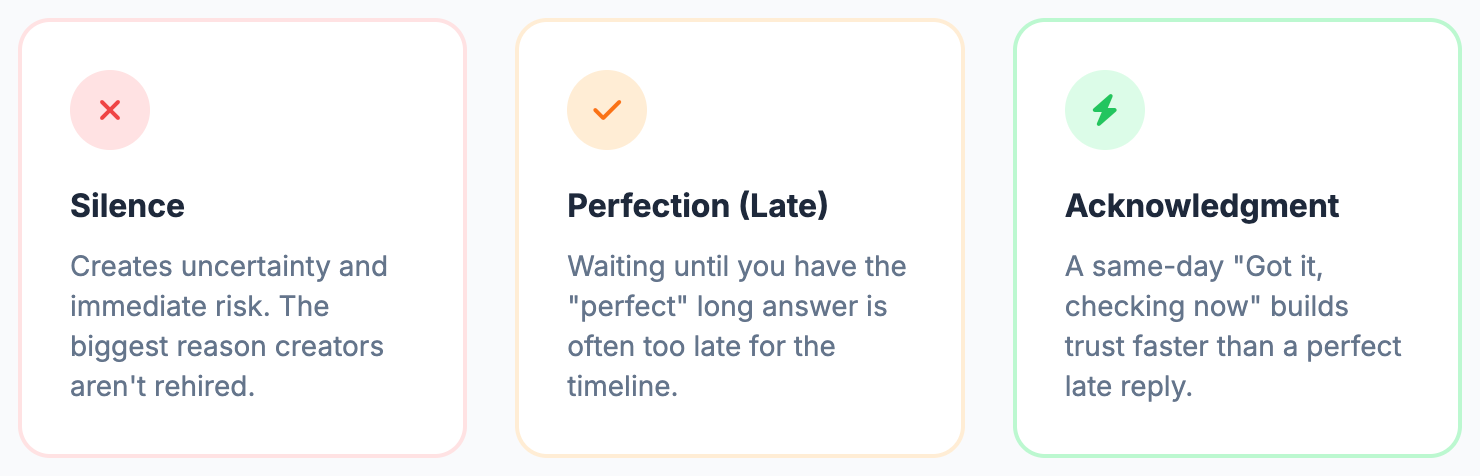
A simple same-day reply or a quick acknowledgment like “Got this, I’ll confirm tomorrow” builds trust fast. Silence does the opposite.
This might sound small, but it’s one of the biggest reasons creators don’t get hired again.
Keep in mind that speed is one of the most important factors nowadays.
2) Ghosting Is the Fastest Way to Kill Trust
Few things damage a creator’s reputation faster than disappearing mid-collaboration.
From a creator’s perspective, life happens. You get busy, overwhelmed, unsure what to say, or waiting until you have the “perfect update.”
From a brand’s perspective, silence feels like risk.
They’ve approved you, planned content around you, and often already shipped a product. When communication stops, they don’t just feel annoyed, they feel exposed.
This is why ghosting has such a strong impact on rehire decisions. Even if the content eventually gets delivered, the memory of chasing updates sticks.
And here’s the uncomfortable truth: brands rarely confront creators about this directly. They simply don’t work with them again.
Reliability in communication matters just as much as reliability in content delivery.
The creators who get rehired most often aren’t perfect. They’re predictable. They give updates, confirm timelines, and keep the brand informed, even when things are delayed.
A short message like “Running two days behind, I’ll deliver on Friday” can save a collaboration. Silence almost never does.
3) Ignoring the Brief Creates Hidden Friction
Many creators think the real work starts after they receive the product.
In reality, the collaboration begins the moment they apply to the campaign.
When a creator applies, the brand assumes one thing: “They read the brief and can deliver what we asked for.”
So when the final content ignores key details, it creates instant friction. Not dramatic conflict. Just quiet disappointment.
This often shows up in small but costly ways:
- mispronouncing the brand or product name
- using the product incorrectly
- missing required talking points
- delivering the wrong format or video length
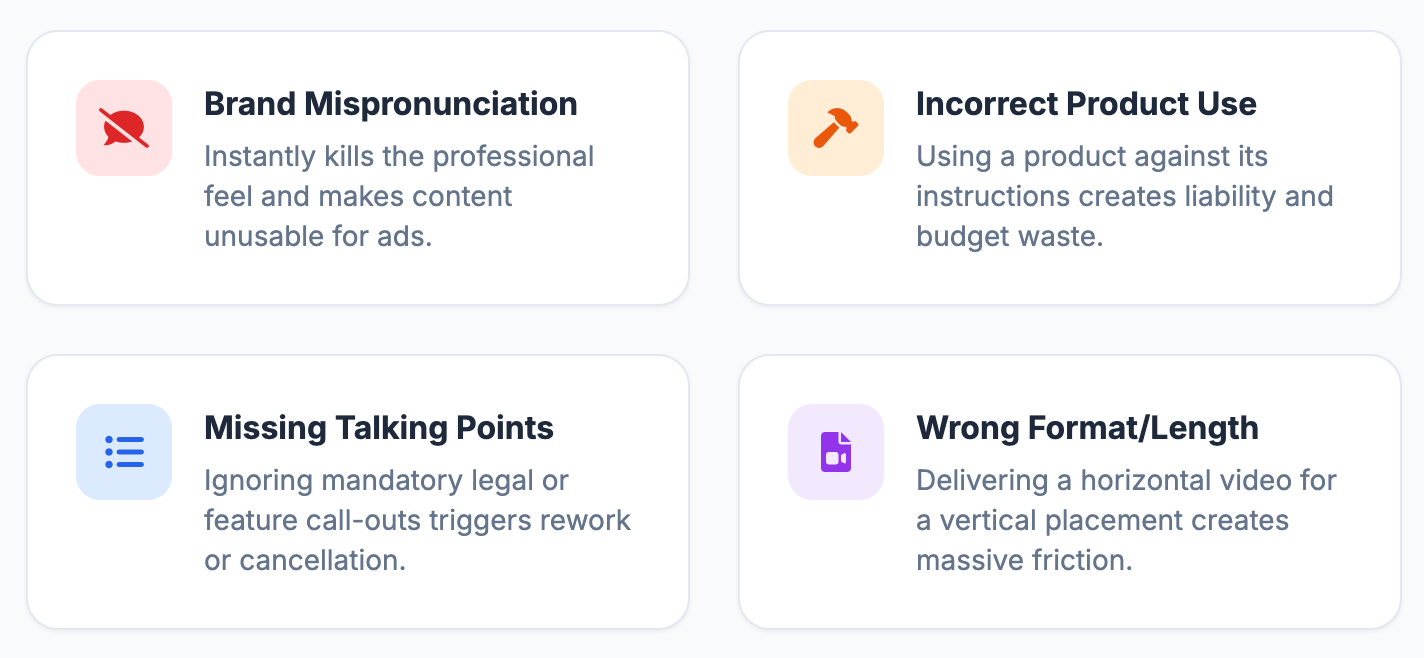
These mistakes rarely lead to big arguments. Instead, they lead to edit requests, delays, and extra back-and-forth.
And after the campaign ends, brands remember the creators who required extra effort.
The easiest creators to rehire are the ones who make the process feel smooth. They read the brief carefully, ask clarifying questions early, and deliver content that already aligns with expectations.
Because to brands, following the brief isn’t “going the extra mile.”
It’s the baseline for being easy to work with.
4) Taking Edits Personally Slows Everything Down
Edits are a normal part of marketing. Every ad, every campaign, every piece of branded content goes through revisions.
But many creators still see edit requests as criticism.
Brands see them as collaboration.
When a creator reacts defensively, pushes back emotionally, or disappears after receiving feedback, the entire workflow slows down. The brand now has to manage not just the content, but the relationship.
And this is where rehire decisions quietly happen.
Brands remember the creators who:
- accept feedback calmly
- respond quickly
- implement changes without friction
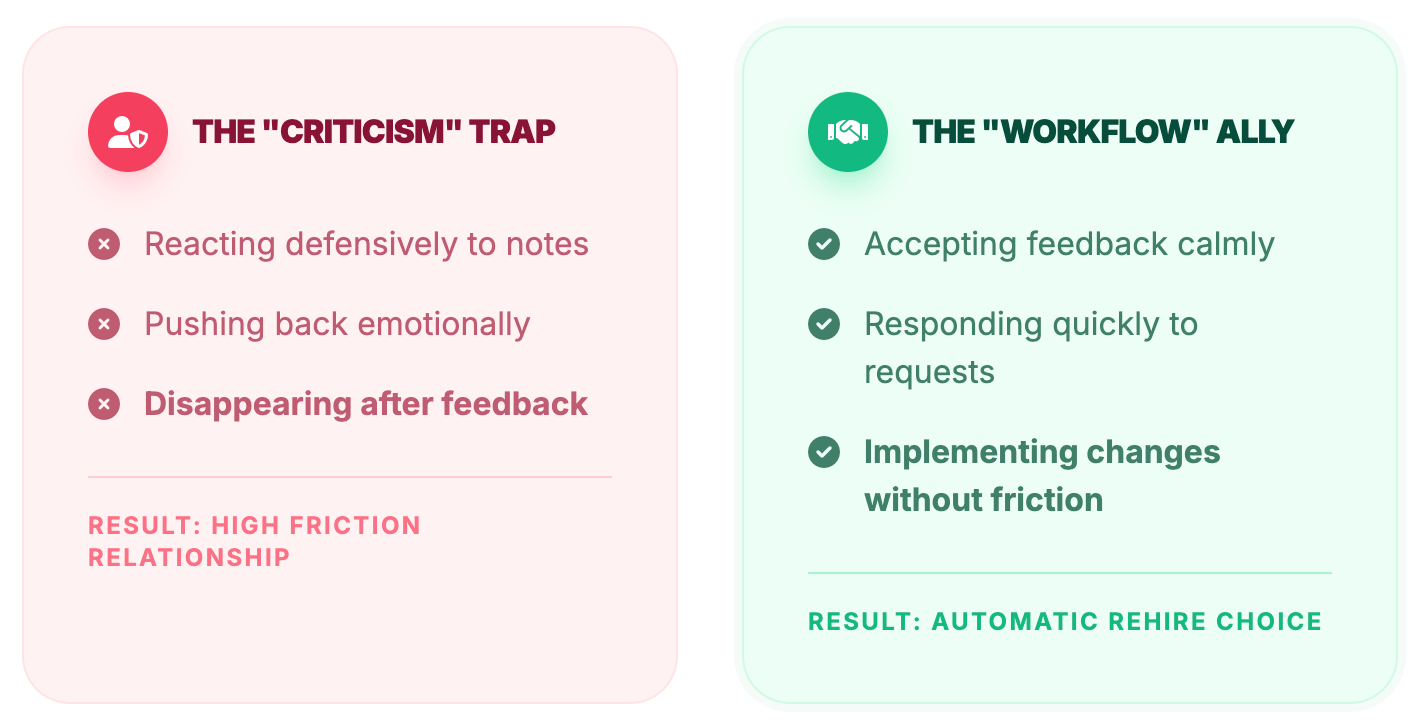
They also remember the creators who turn a simple edit into a long conversation.
The creators who get rehired most often treat edits as part of the job, not a personal attack. They understand that brands have different messaging goals, legal requirements, and ad performance data influencing their requests.
Being “easy to work with” during edits is one of the strongest signals that a creator is ready for long-term partnerships.
5) Poor Production Basics Create Avoidable Edits
Most rejections don’t happen because of creativity.
They happen because of basic production issues that should never reach the brand in the first place.
Things like unclear audio, shaky footage, dirty lenses, messy backgrounds, or incorrect lighting instantly signal extra work for the brand. Even small details, background noise, stains on clothing, fluff on fabric, become reasons for revisions.
And here’s the uncomfortable part: sometimes brands won’t even request changes. They’ll simply decide not to work with that creator again.
From the brand’s perspective, every avoidable edit costs time. More emails. More feedback. More delays. More coordination.
Creators who get rehired consistently remove this friction before it exists. They double-check pronunciation, review footage carefully, test audio, and watch their content back before submitting.
Because high-quality content doesn’t just look good.
It makes the brand’s job easier.
6) Waiting for the Brand to Lead the Conversation
Many creators assume that once they’re approved, the brand will guide every next step.
But brands are often managing dozens of creators at the same time. Campaigns move fast, timelines overlap, and communication gaps happen more often than you’d expect.
When a creator waits passively for instructions, the collaboration can stall before it even properly begins.
The creators who get rehired most often do the opposite. They take initiative early and set the tone for the collaboration.
A simple starter message can change everything:
- thank the brand for approving the collaboration
- confirm the timeline
- confirm the shipping address
- ask if anything has changed since the brief
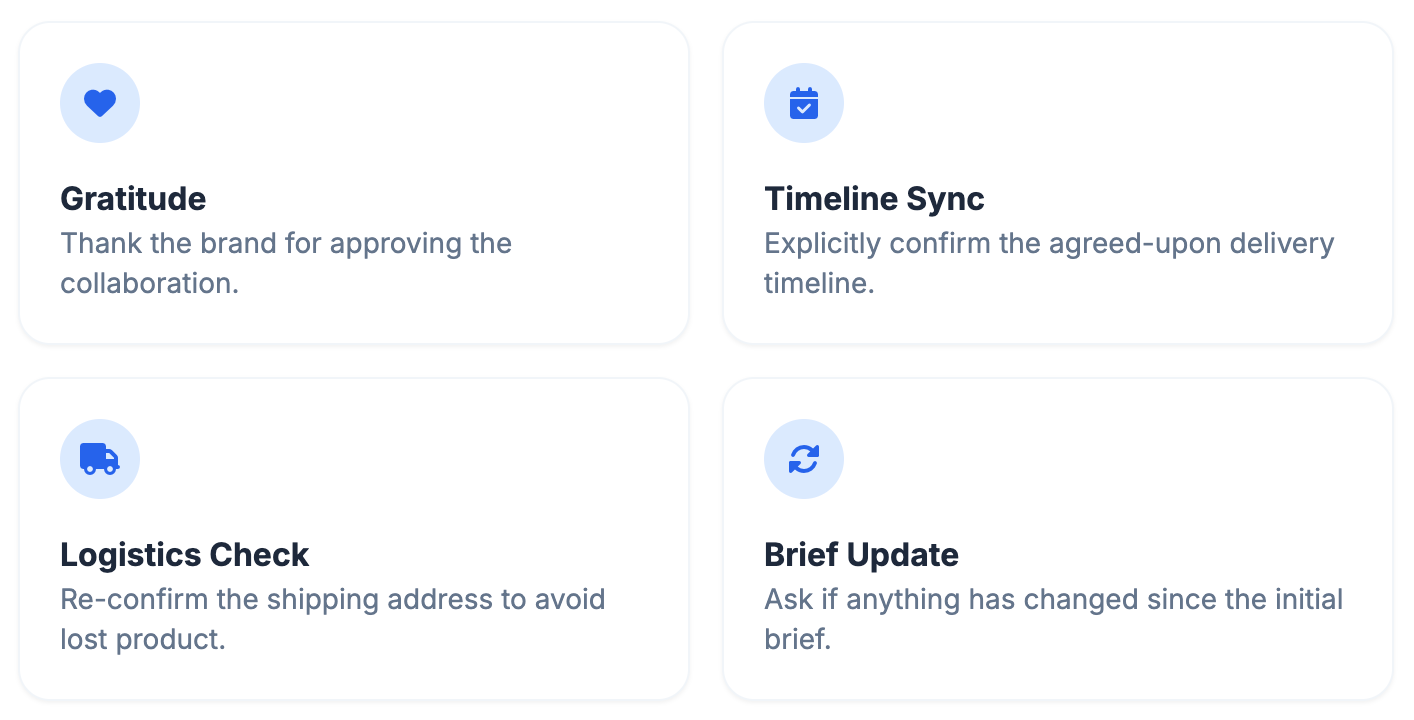
This small step signals professionalism, reliability, and ownership of the project.
To a brand, that message says: “I take this seriously and I’m ready to work.”
And that’s exactly the type of creator they want to work with again.
7) Taking Edit Requests Personally
One of the biggest mindset shifts creators need to make is this:
Edits are not criticism. Edits are collaboration.
Brands rarely request changes because they dislike the creator. Most of the time, they’re simply trying to make the content fit a campaign, platform requirement, or legal guideline.
But when creators react defensively, emotionally, or reluctantly, the experience becomes uncomfortable for the brand.
From the brand’s perspective, this creates friction:
- conversations become tense
- timelines slow down
- future collaborations feel risky
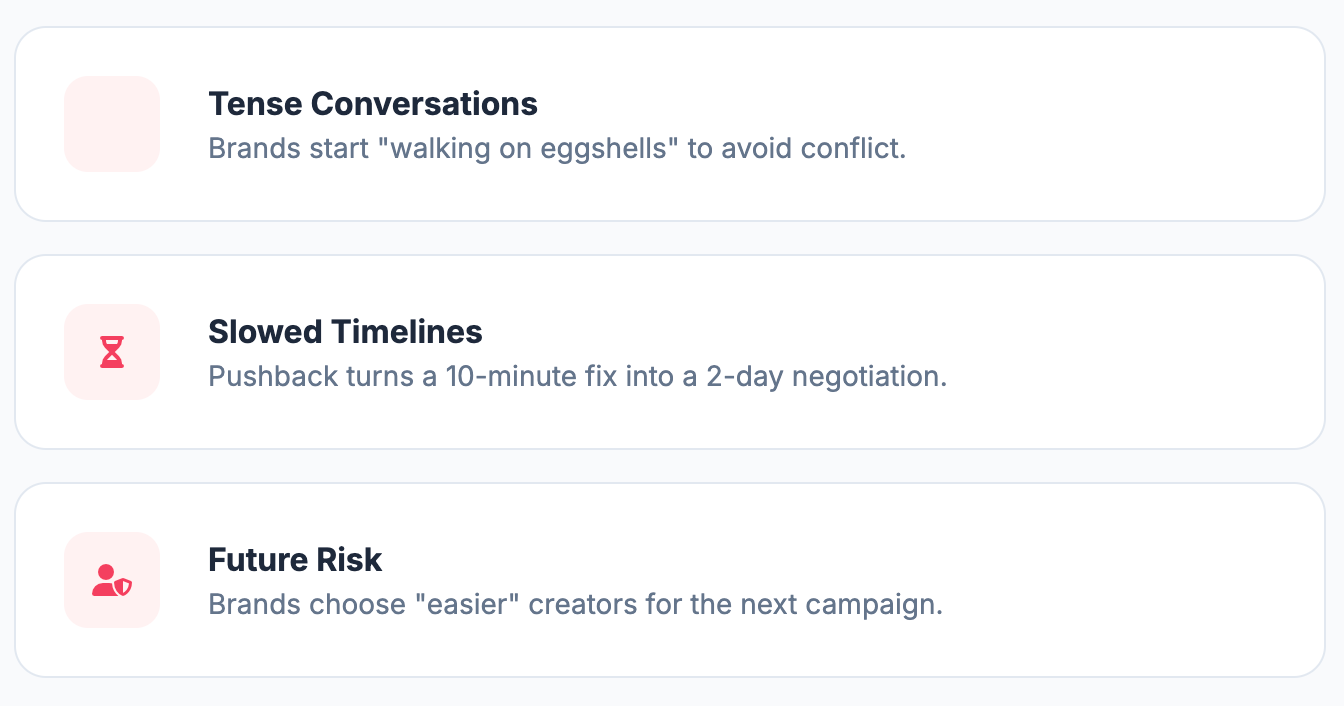
The creators who get rehired treat edits as a normal part of the workflow. They stay calm, ask clarifying questions if needed, and deliver revisions quickly.
And this has a huge long-term payoff.
Because once a brand labels you as “easy to work with,” you stop being just another creator in the marketplace. You become someone they trust and return to whenever a new campaign starts.
8) Causing Avoidable Mistakes That Hurt Brand Confidence
This part is uncomfortable, but it’s extremely real.
Many creators don’t lose repeat work because the content was bad.
They lose repeat work because the content created extra work for the brand.
And most of the time, it comes from simple, preventable mistakes.
Things like:
- mispronouncing the brand or product name
- using the product incorrectly
- poor audio or lighting
- blurry footage
- messy clothing or background distractions
- clearly not reading the brief carefully
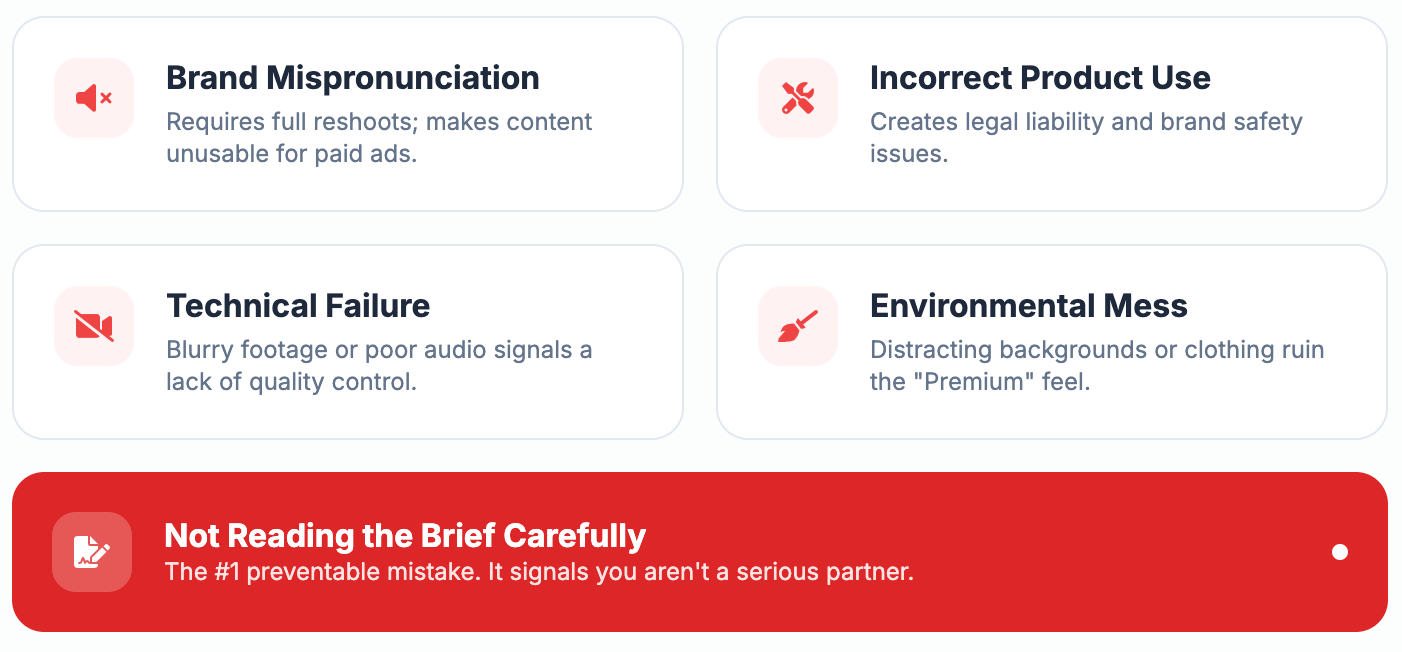
These may feel like small details. But to brands, they signal risk.
If a brand has to double-check everything, request fixes, or worry about publishing mistakes, the collaboration stops feeling smooth. And when brands choose creators for the next campaign, they naturally pick the ones who felt reliable and effortless.
The harsh reality is this: sometimes brands won’t even request changes.
They’ll simply decide not to hire the creator again.
The creators who get rehired treat quality control as part of their job. They check the brief twice, review their footage carefully, and deliver content that feels ready to use.
Because the easier you make the brand’s job, the more likely they are to come back.
9) Ignoring the Power of Overcommunication
One of the biggest mindset shifts for creators is realizing this:
There is no such thing as too much communication in a collaboration.
Most campaign problems don’t happen because someone did something wrong. They happen because someone assumed something.
Creators assume the timeline is flexible.
Brands assume the creator understood the brief.
Everyone assumes the other side will speak up if something changes.
And then delays, confusion, and frustration start piling up.
Overcommunication prevents almost all of this.
Simple updates like:
- confirming you received the product
- sharing a rough timeline
- warning the brand about delays early
- asking clarifying questions before filming
These small messages build trust fast. They show that you’re proactive and dependable, not just waiting for instructions.
From a brand’s perspective, silence is stressful. Even if everything is going well, not hearing from a creator creates uncertainty.
Creators who communicate often feel safe to work with. And “safe to work with” is one of the strongest reasons brands choose to collaborate again.
10) Not Sending the First Message When a Brand Goes Quiet
This situation happens more often than creators expect.
You get approved for a campaign.
You’re excited.
You wait for the brand to message you first.
And then… nothing happens.
Many creators assume the brand lost interest or changed plans. In reality, brands are often juggling dozens of creators, campaigns, and deadlines. Sometimes they simply forget to start the conversation.
Here’s the difference between a one-time creator and a repeat-hire creator:
The repeat-hire creator sends the first message.
A simple starter message instantly signals professionalism and removes friction. Something like:
- Thank them for approving you
- Confirm the timeline
- Confirm the shipping address
- Ask if anything changed since the brief
This takes less than a minute, but it positions you as organized, proactive, and serious about the collaboration.
Brands remember creators who move projects forward.
And the creators who move projects forward are the ones brands come back to.
11) Not Understanding What Counts as a “Fair” Edit Request
Edits are a normal part of UGC. Every experienced creator knows this.
But many creators lose repeat collaborations because they react defensively when feedback arrives.
From a brand’s perspective, there are two types of edits: quality edits and preference edits.
Quality edits are completely fair.
These include things that affect clarity, accuracy, or usability of the content, like:
- Poor audio or lighting
- Blurry footage
- Mispronouncing the brand or product
- Using the product incorrectly
- Cutting the video to fit the agreed length
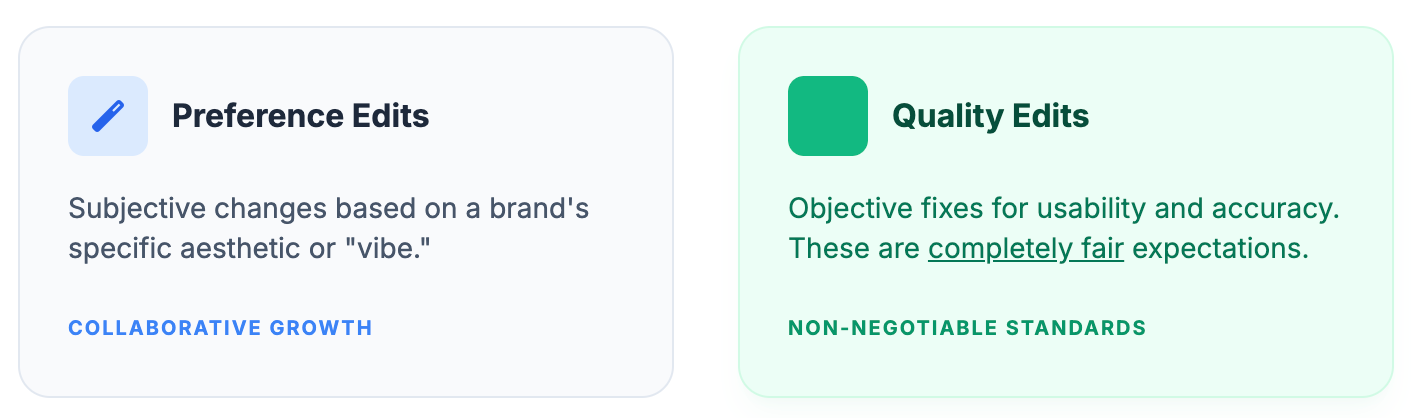
These fixes help the content perform better. Brands expect creators to handle them calmly and professionally.
Where friction appears is when creators treat every edit as criticism instead of collaboration.
The reality is simple: brands are not trying to attack your creativity. They’re trying to make sure the content works for ads, landing pages, and social media.
Creators who stay calm, open, and solution-focused become easy to work with.
And “easy to work with” is one of the biggest reasons brands hire the same creators again.
12) Taking Feedback Personally Instead of Professionally
This is a silent deal-breaker.
Many creators say they want long-term brand relationships… but the moment feedback arrives, the tone changes.
You can feel it in the reply:
- defensive language
- passive-aggressive tone
- long explanations about why the content is “actually fine”
From the brand’s side, this creates tension immediately.
Remember: brands are not hiring you just for creativity. They’re hiring you because they need content that works for marketing. That means feedback will always exist.
The creators who get rehired understand one simple mindset shift:
Feedback is not rejection. It’s collaboration.
Brands love creators who reply with things like:
- “Got it, I can fix this.”
- “Thanks for the note, I’ll update the audio and send a new version.”
- “Happy to adjust this part, anything else you’d like changed?”
That tone alone makes you stand out.
Because when brands compare creators after a campaign, they don’t only remember the videos. They remember the experience of working with you.
And creators who are calm, cooperative, and solution-oriented become the safest choice for the next campaign.
13) Waiting for the Brand to Lead Every Conversation
This one surprises a lot of creators.
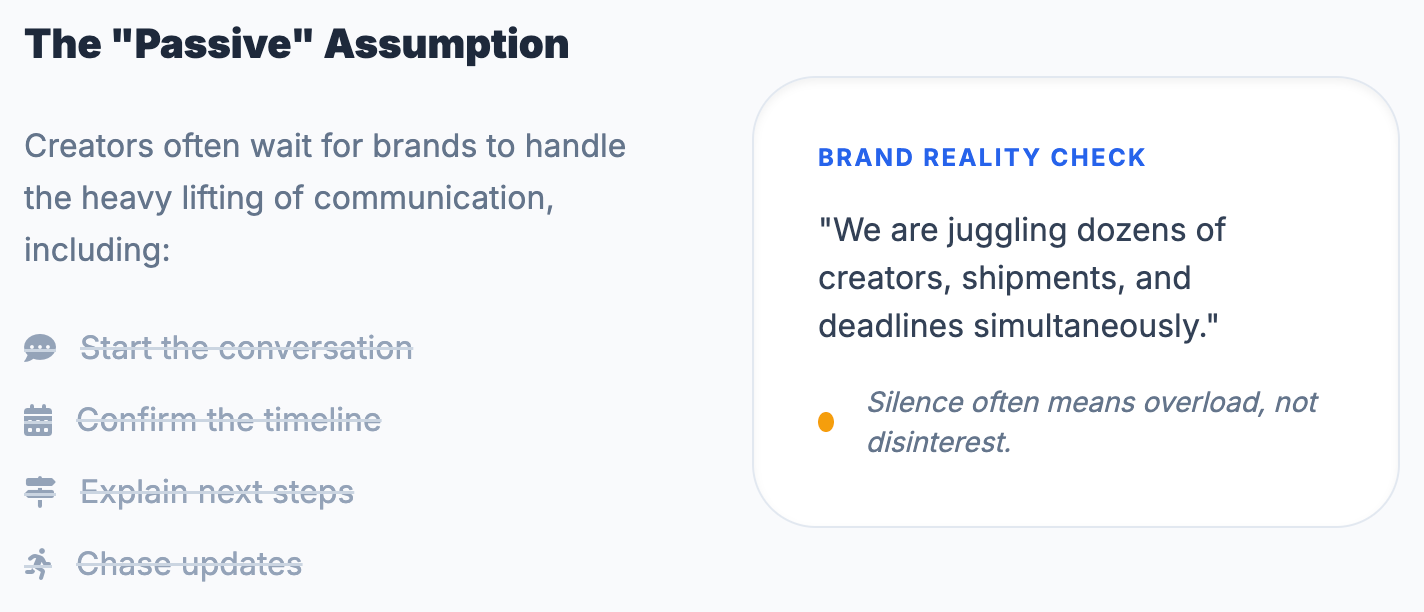
Many assume that once they’re approved, the brand will guide every step:
- start the conversation
- confirm the timeline
- explain next steps
- chase updates
In reality, brands are juggling dozens of creators, campaigns, shipments, approvals, and deadlines at the same time. Silence doesn’t always mean disinterest, it often means overload.
Creators who wait quietly can unintentionally create delays, confusion, or even missed campaigns.
The creators who get rehired do the opposite. They lead the collaboration early.
A simple “starter message” makes a huge difference:
- thank the brand for approving you
- confirm the timeline
- confirm your address or shipping details
- ask if anything changed since the brief
This does two powerful things at once.
First, it shows professionalism and initiative. You instantly look organized and reliable.
Second, it protects you. If timelines or expectations shift later, you already have clarity documented.
From the brand’s perspective, this kind of creator feels safe to work with. They reduce uncertainty, prevent delays, and keep projects moving.
And when brands think about who to hire again, they remember the creators who helped the campaign run smoothly, not the ones who waited silently for instructions.
14) The Creators Who Earn More Treat UGC Like a Business
One of the biggest mindset shifts in the creator economy is happening right now.
UGC is no longer “one video for one fixed fee.”
It’s becoming a real service, with processes, boundaries, and additional paid work.
Brands increasingly understand that:
- extra edit rounds take time
- raw footage has value
- rush timelines require flexibility
- revisions beyond the brief are additional work
The creators who get rehired (and paid more) are the ones who treat collaborations professionally from the start.
That means being clear about scope, timelines, and expectations, not in a rigid way, but in a business-minded way.
For example:
- One round of edits is standard.
- A second round? That can be extra work.
- Raw footage? That’s additional value for the brand.
When creators communicate this calmly and early, it doesn’t scare brands away. It actually builds trust.
Why? Because brands want predictable collaborators. They want to know what’s included, what isn’t, and how things work.
Ironically, the creators who undervalue their work often feel the most chaotic to collaborate with. Everything feels unclear, rushed, and improvised.
But creators who operate like professionals feel stable and easy to work with, and those are the creators brands keep coming back to.
Conclusion — Being Easy to Work With Is the Real Superpower
Most creators believe the hardest part of UGC is getting the first collaboration.
But in reality, the real money is in repeat work.
Brands don’t want to constantly search, vet, brief, and onboard new creators. It’s slow, risky, and expensive. When they find someone reliable, responsive, and easy to collaborate with, they want to keep them.
That’s why the creators who earn the most are rarely the ones who just look good on camera.
They’re the ones who make the entire process smooth.
They reply quickly.
They read the brief carefully.
They communicate clearly.
They stay calm during edits.
They treat UGC like a real business.
And brands remember that.
If you take one idea from this guide, let it be this:
Being great on camera gets you hired once.
Being great to work with gets you hired again and again.
And in the long run, repeat collaborations are what turn UGC into a real, sustainable income stream.
Table of contents
- The Real Reason Brands Care About Repeat Creators
- 1) Slow Replies Signal Low Reliability
- 2) Ghosting Is the Fastest Way to Kill Trust
- 3) Ignoring the Brief Creates Hidden Friction
- 4) Taking Edits Personally Slows Everything Down
- 5) Poor Production Basics Create Avoidable Edits
- 6) Waiting for the Brand to Lead the Conversation
- 7) Taking Edit Requests Personally
- 8) Causing Avoidable Mistakes That Hurt Brand Confidence
- 9) Ignoring the Power of Overcommunication
- 10) Not Sending the First Message When a Brand Goes Quiet
- 11) Not Understanding What Counts as a “Fair” Edit Request
- 12) Taking Feedback Personally Instead of Professionally
- 13) Waiting for the Brand to Lead Every Conversation
- 14) The Creators Who Earn More Treat UGC Like a Business
- Conclusion — Being Easy to Work With Is the Real Superpower
Table of contents
- The Real Reason Brands Care About Repeat Creators
- 1) Slow Replies Signal Low Reliability
- 2) Ghosting Is the Fastest Way to Kill Trust
- 3) Ignoring the Brief Creates Hidden Friction
- 4) Taking Edits Personally Slows Everything Down
- 5) Poor Production Basics Create Avoidable Edits
- 6) Waiting for the Brand to Lead the Conversation
- 7) Taking Edit Requests Personally
- 8) Causing Avoidable Mistakes That Hurt Brand Confidence
- 9) Ignoring the Power of Overcommunication
- 10) Not Sending the First Message When a Brand Goes Quiet
- 11) Not Understanding What Counts as a “Fair” Edit Request
- 12) Taking Feedback Personally Instead of Professionally
- 13) Waiting for the Brand to Lead Every Conversation
- 14) The Creators Who Earn More Treat UGC Like a Business
- Conclusion — Being Easy to Work With Is the Real Superpower