

A lot of UGC videos look beautiful at first glance. They have clean lighting, close-up product shots, soft colors, trendy music, and that polished aesthetic that feels made for social media. But here’s the problem: looking good is not the same as working well.
Some videos are visually strong, yet they still fail to keep people watching. They do not explain the product clearly, they do not show why it matters, and they do not give the viewer a real reason to care. On the other hand, some UGC videos feel much simpler, more natural, and less “perfect,” yet they do a far better job of building trust and driving action.
That is where the difference between aesthetic content and effective UGC becomes clear. One is focused on looking nice. The other is focused on communicating something useful in a way that feels real, clear, and convincing.
In this article, we’ll look at why some UGC videos are pleasant to watch but weak in performance, while others manage to feel authentic, engaging, and actually effective for brands.
Why “Pretty” Content Isn’t Always Good UGC
A lot of creators assume that if a video looks good, it must be good UGC. And to be fair, strong visuals do matter. Good lighting, clean framing, nice close-ups, and a polished edit can absolutely help a piece of content feel more appealing. They make someone stop for a second. They create that first impression.
But that first impression is not the whole job.
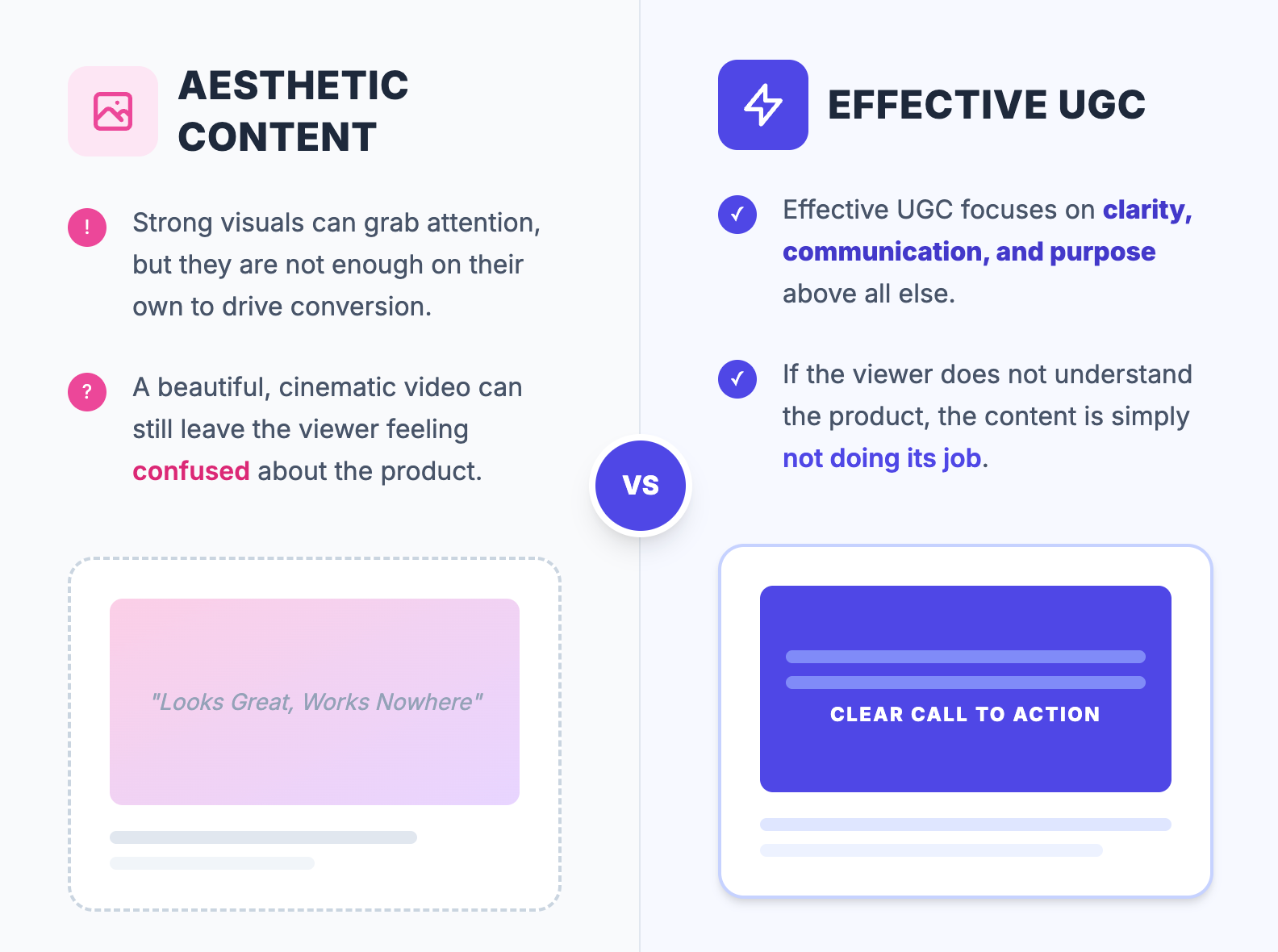
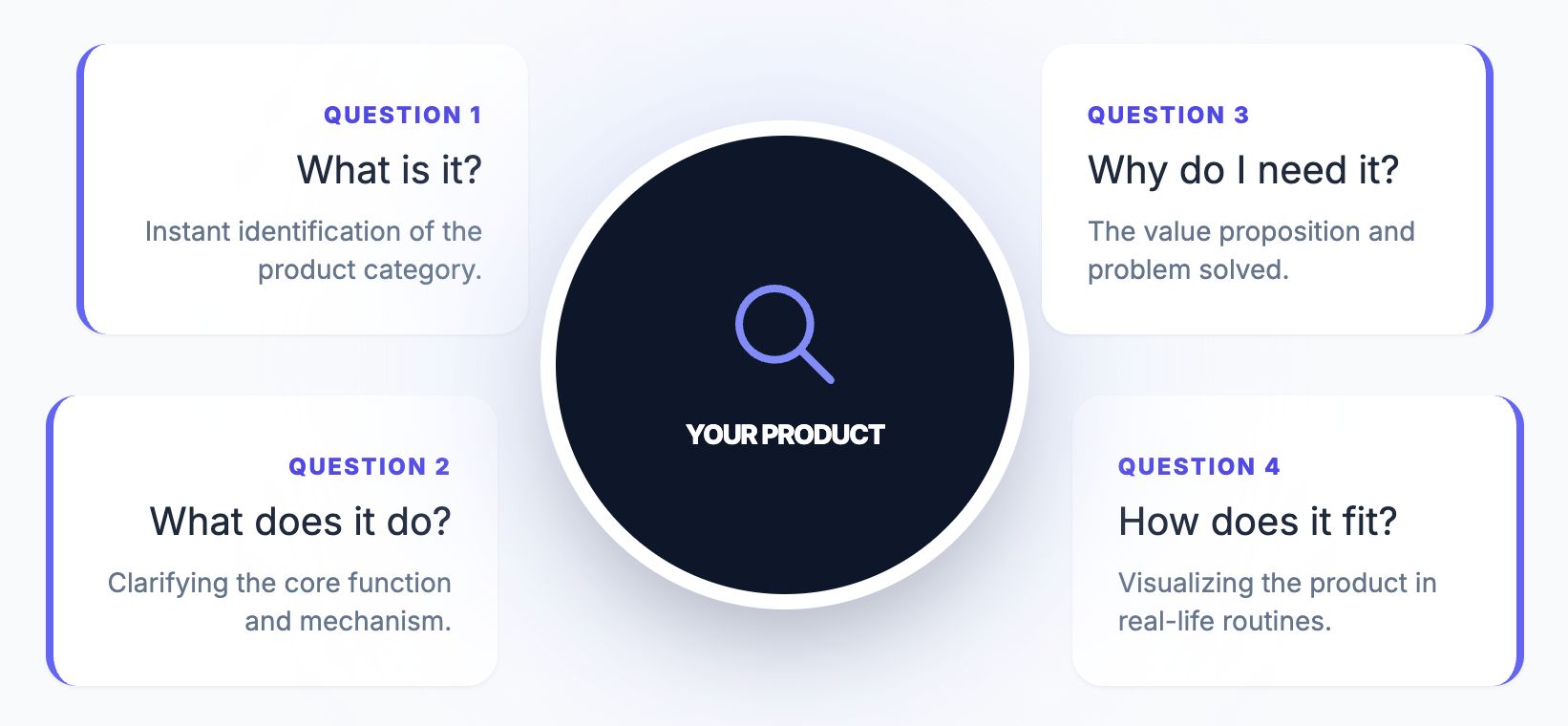
The problem with purely aesthetic content is that it often puts almost all of its energy into how the video looks, while giving much less attention to what the video is actually saying. You get beautiful product shots, soft music, maybe a few satisfying textures or slow-motion clips, but by the end of the video, the viewer still does not really understand the product. What is it? What does it do? Why should they care? How does it fit into real life?
That is where effective UGC is different. Effective UGC is not just about creating a vibe. It is about communication. It helps the viewer understand something quickly and naturally. It gives context. It shows the product in a way that feels clear, useful, and believable. And in many cases, that is what makes the content convert.
A beautiful video can still fail if it leaves people confused. In fact, some of the most polished content performs poorly for exactly that reason. It looks expensive, it looks well-made, but it does not answer the basic questions a customer has in mind. And if people do not understand the product, the content is not doing its job.
So yes, visuals matter. They help grab attention and shape the tone of the video. But on their own, they are not enough. Good UGC needs more than aesthetic appeal. It needs clarity, direction, and a reason for the viewer to keep watching.
Aesthetic Content Shows the Product. Effective UGC Explains It.
One of the biggest differences between aesthetic content and effective UGC is simple: one shows the product, while the other helps people understand it.
Aesthetic videos are often great at making a product look appealing. They highlight textures, packaging, close-up details, clean shelves, soft lighting, and satisfying little product moments. And there is definitely value in that. These kinds of visuals can make a product feel more premium, more desirable, or more in line with a certain lifestyle.
But there is a limit to how far visuals alone can take you.
A viewer can watch a beautiful video and still walk away with basic questions. What exactly is this product? What does it actually do? Why would I need it? When would I use it? How does it fit into my day-to-day life? If the content does not answer those questions in some way, it may create interest, but it does not do much to build understanding.
That is where effective UGC stands out. It does not just present the product as something nice to look at. It gives the viewer context. It helps them quickly understand the purpose of the product and where it fits into a real routine, problem, or lifestyle. And the best part is that it usually does this in a very natural way. It does not need to sound like an ad or a product manual. It just needs to make the product make sense.
This matters even more for products like skincare, supplements, beauty items, or home products. These are categories where people usually need a little more than a nice close-up. They want to know what the product is supposed to help with, how to use it, what makes it different, and why it deserves attention in the first place. A polished shot of a jar, a bottle, or a nicely styled room can catch the eye, but explanation is what helps move the viewer closer to trust.
Effective UGC answers those questions without making the content feel heavy. It can be as simple as showing the product in use, adding a short line of context, or framing the video around a real situation. That small layer of explanation is often what turns a pretty product video into a piece of content that actually works.
The Role of Storytelling in Effective UGC
A lot of people hear the word “storytelling” and immediately think of long-form content, personal brand videos, or emotional brand campaigns. But storytelling matters just as much in short-form UGC. Even a 15-second product video needs some kind of structure. Without it, the content may look nice, but it can still feel random, flat, or unfinished.
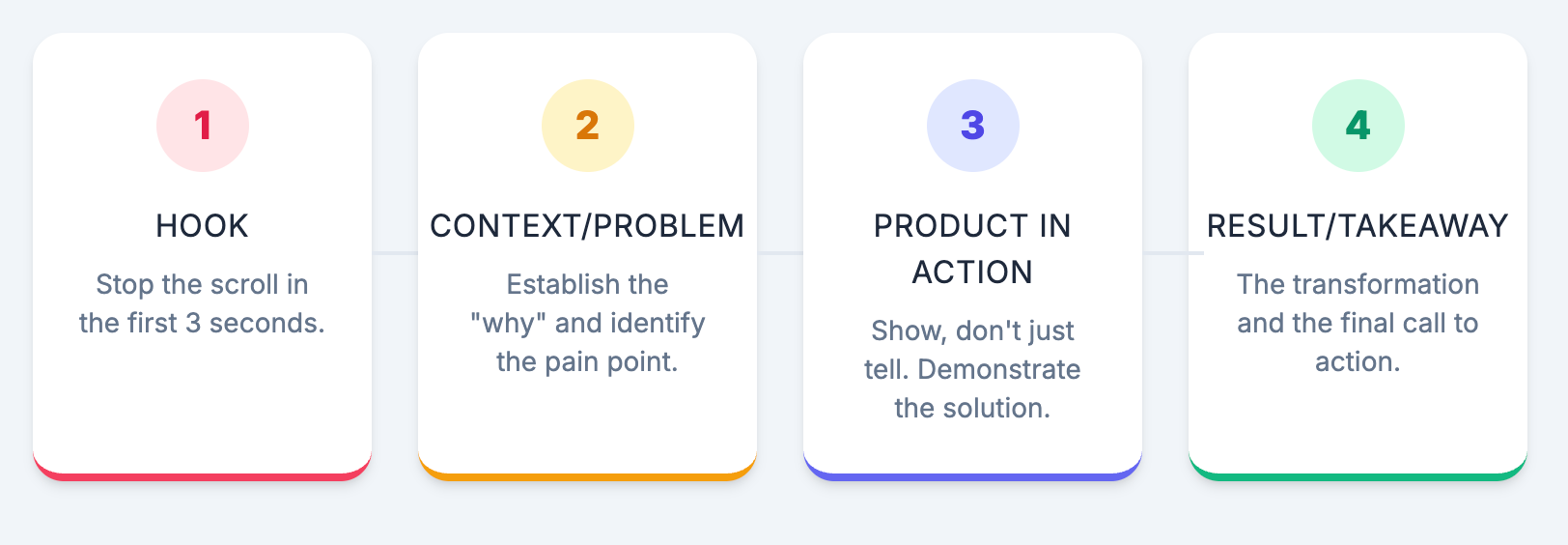
At its core, good UGC usually follows a simple flow. First, there is a hook that gives the viewer a reason to pay attention. Then comes a problem, context, or relatable situation that helps them understand why the product matters. After that, the product is shown in action, not just as an object, but as part of a real use case. And finally, there is some kind of result, reaction, or takeaway that gives the video a natural ending.
This does not have to feel forced or overly scripted. In fact, the best UGC often feels effortless. But even when it feels casual, there is still a progression underneath it. The viewer is being guided from interest to understanding.
When that structure is missing, the video often feels abrupt. You might see a few nice clips of a product, maybe some editing, maybe a quick application shot, but nothing really connects. There is no build. No context. No reason for one moment to lead into the next. The result is content that feels more like a collection of shots than a complete piece of communication.
This is especially important because even videos without voiceover still need storytelling. Just because nobody is speaking does not mean the video gets a free pass on structure. The shots still need to tell the viewer something. They still need to create flow, show progression, and make the product feel relevant. A no-voiceover video can work beautifully, but only when the visuals are doing more than just looking nice.
That is one of the biggest differences between aesthetic content and effective UGC. Aesthetic content often captures moments. Effective UGC connects those moments into a clear viewer experience. It helps the audience follow what is happening, why it matters, and what they are meant to take away from it.
Why Shot Variety Matters More Than People Think
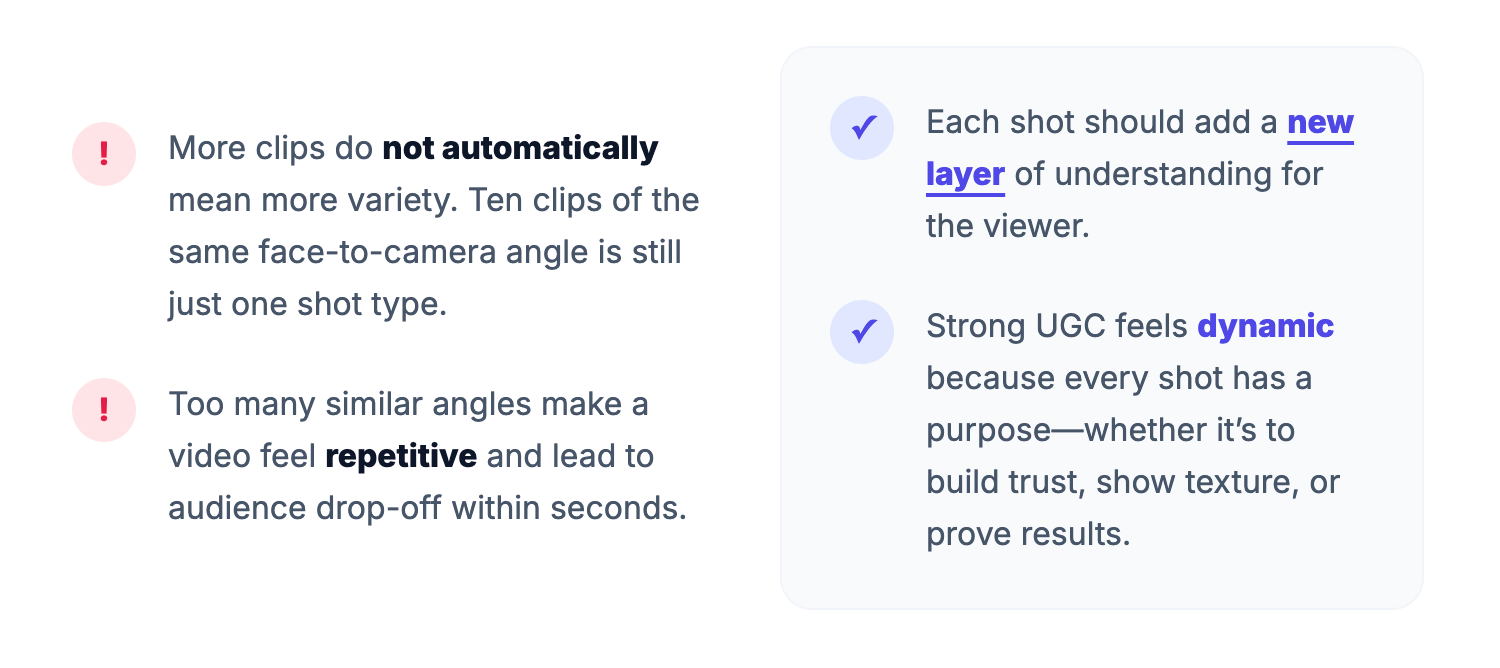
A lot of creators think shot variety simply means using more clips. So they film ten, fifteen, or even twenty short shots and assume that is enough to make the video feel dynamic. But having a lot of clips is not the same as having real variety.
If most of those clips are showing the same thing from nearly the same angle, the video will still feel repetitive. It may be fast-paced, but it will not feel fresh. And that is where a lot of UGC starts to lose momentum. The viewer keeps seeing the product, but they are not learning anything new from one shot to the next.
Real shot variety comes from giving each clip a different job. One shot might be a close-up of the product. Another might be a wider lifestyle shot that shows where it fits into a routine. Another might show the product being used in real time. Then you might add a texture shot, a detail shot, or a simple context scene that helps the viewer understand the setting. Each shot should reveal something slightly different.
That mix is what makes UGC feel complete. Product close-ups can make the item look appealing. Wider shots help ground it in real life. In-use shots show function. Texture and detail shots add visual interest. Routine-based scenes make the product feel more relatable and easier to imagine using. Together, they create a fuller picture in the viewer’s mind.
When creators rely too heavily on similar angles, even well-shot videos can start to feel flat. A product shown five times in slightly different close-ups is still just five close-ups. It might look polished, but it does not build much depth. Good shot variety keeps the content moving while also helping the viewer understand the product from multiple angles, both visually and practically.
That is the real reason shot variety matters so much. Effective UGC does not feel dynamic because it is overloaded with edits. It feels dynamic because every shot adds something new.
Editing Can Either Support the Video or Ruin It
Editing is one of those things people only notice when it goes wrong. A video can have strong lighting, nice shots, and a good product, but if the editing feels off, the whole thing starts to fall apart.
A lot of creators think fast editing automatically makes content better. Sometimes it does help, especially on short-form platforms where attention moves quickly. But fast editing is not the same as good editing. If the cuts are too sharp, the pacing feels rushed, or the music does not match the visuals, the video can start to feel messy instead of engaging.
This is where a lot of aesthetic content struggles. It may have the right vibe, but the edit does not actually support the viewer experience. The scenes move too quickly to process, or they drag on too long without adding anything new. A beautiful sequence can still feel tiring if the rhythm is off.
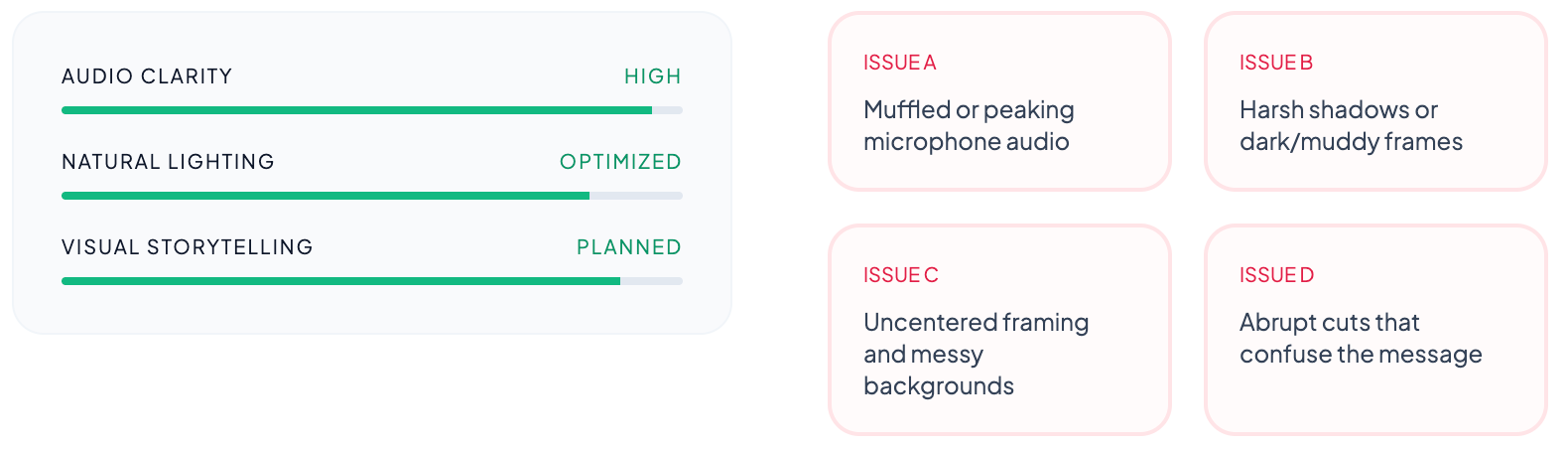
Some of the most common editing issues are surprisingly simple. Abrupt endings make a video feel unfinished. Scenes that stay on screen too long can kill momentum. Awkward cuts break immersion. Poor timing with the music makes the whole piece feel slightly off, even if the viewer cannot explain why. And glitchy transitions or effects can make the content feel less polished and less trustworthy.
Good editing should not call attention to itself for the wrong reasons. It should help the video feel smooth, intentional, and easy to follow. It should guide the viewer through the message, not distract from it. Every cut should feel like it belongs there, and every change in pace should support what the video is trying to say or show.
That is one of the clearest differences between aesthetic content and effective UGC. Aesthetic content may rely on vibe. Effective UGC uses editing to improve clarity and flow. It does not just try to look good. It helps the content make sense.
Audio Is One of the Biggest Differences Between Amateur and Effective UGC
A video can look great and still feel weak the moment the audio starts. That is because audio shapes how easy the content is to follow. It affects clarity, trust, and overall quality much more than many creators realize.
Bad audio can instantly weaken a good-looking video. You might have clean shots, nice lighting, and a solid script, but if the sound feels messy, distracting, or hard to understand, the content loses impact very quickly. People should not have to work to hear what is being said or figure out what to focus on.
One common issue is music competing with the voiceover. A background track is supposed to support the video, not fight against it. When the music is too loud, too dramatic, or too busy, it starts pulling attention away from the message. This gets even worse when the song has vocals in it. If someone is singing in the background while the creator is also talking, the viewer ends up hearing two messages at once. Even if the visuals are beautiful, that kind of audio clash can make the whole video feel harder to process.
Sound effects can create the same problem. They can be useful when they are subtle and placed with intention, but overused sound effects often make a video feel forced. Instead of adding energy, they start to distract from the actual content. The same goes for low voiceover volume, which makes the viewer lean in just to understand what is being said. Audio pops, harsh sounds, or inconsistent volume levels can also make a video feel less polished right away.
Pronunciation matters too. This is not about having a certain accent or sounding overly polished. It is about being understandable. If product names, key terms, or important phrases are unclear, the viewer starts missing information. And once that happens, the content becomes less effective, no matter how nice it looks.
Strong UGC keeps audio simple, clear, and aligned with the mood of the video. The voice should be easy to hear. The music should support the tone without overpowering it. Any sound effects should feel natural, not crowded in for no reason. Everything should work together so the message comes through easily.
That is the real standard to aim for. If the viewer has to work to understand the video, the content starts losing power. Effective UGC removes that friction and makes the whole experience feel smoother, clearer, and more convincing.
Authenticity Still Needs Structure
One of the reasons UGC works so well is that it feels more real than traditional brand content. It feels closer, more personal, and less staged. Especially on platforms like TikTok, raw content can perform extremely well because people are drawn to videos that feel natural and honest.
But natural does not mean careless.
A lot of creators confuse authenticity with being unstructured. They assume that if a video feels casual, it does not need much planning. In reality, the best UGC usually feels relaxed on the surface while still being very intentional underneath. It may look effortless, but there is still a reason the lighting works, the framing makes sense, and the message comes through clearly.
Viewers are generally open to a more raw style of content, but they still expect a basic level of quality. They want to be able to see the product clearly. They want speech that is understandable. They want framing that is not distracting and a video that has some kind of flow from beginning to end. If those things are missing, the content stops feeling authentic and starts feeling unfinished.
That is an important distinction. Authenticity should make a video feel believable, not sloppy. A creator does not need a studio setup or a perfect script, but they do need to think about how the content will be received. Even simple choices like facing the light, cleaning up the audio, or making sure the product is shown clearly can make a huge difference without taking away that natural feel.
The strongest UGC often lives in that middle ground. It does not feel over-produced, but it also does not feel random. It feels casual while still being well thought out. And that balance is often what makes the content more effective.
Aesthetic content can sometimes feel distant because it focuses so much on appearance. Effective UGC, on the other hand, often feels personal, useful, and believable. That is what gives it its strength.
UGC vs Affiliate-Style Content: Why the Difference Matters
Not every product video is automatically UGC, even if it feels casual and creator-led.
Some videos are much closer to affiliate-style content or simple product recommendations. That kind of content often feels more like someone sharing a favorite product, talking directly to their audience, or giving a quick review in a natural way. And to be clear, that style can work very well. In fact, it often performs strongly on platforms like TikTok because it feels personal, raw, and easy to trust.
But it usually serves a different purpose.
Affiliate-style content is often built around the creator’s own voice, audience, and recommendation style. It is less about following a structured brand objective and more about sharing a product in a way that feels native to the creator’s page. UGC, especially when it is being created for a brand to use in ads, usually needs a bit more than that.
If a brand is asking for UGC, they are often looking for content that is clearer, more intentional, and more directly tied to a conversion goal. That may mean more product proof, more B-roll, more problem-solution framing, and a stronger connection to the original brief. The content may still feel natural, but it needs to help the viewer understand the product, trust the message, and move closer to taking action.
This is where creators can easily run into problems. A video can be good content and still be the wrong type of content for the job. A raw recommendation video might feel authentic and engaging, but if the brand expected structured UGC for paid ads, it may not deliver what they need.
That is why this distinction matters. Before filming anything, creators need to know what type of content they are making. Are they creating a casual recommendation? An affiliate-style video? A conversion-focused UGC ad? A product demo? The answer shapes everything from the script and shot list to the pacing and overall message.
When creators understand that difference early, the final content becomes much stronger and much more useful for the brand.
Small Technical Mistakes That Make Content Feel Less Trustworthy
Sometimes a video does not feel “off” because of the concept, the script, or even the creator. Sometimes it is the small technical details that quietly weaken the whole thing.
These mistakes can seem minor on their own, but together they affect how polished, believable, and usable the content feels. And in UGC, that matters a lot. The goal is not perfection, but the viewer should still feel like the content was made with care.
A simple example is using the wrong dimensions or ending up with black bars in the frame. Even if the actual footage is good, that kind of issue makes the video feel less native to the platform and less finished. The same goes for captions that sit too low, feel too large, or fall outside safe zones. If text gets cut off or competes with platform buttons, the content instantly feels less professional.
Visible filters or editing glitches can create another problem. The moment a viewer notices a face filter shifting, a visual glitch on the edge of the frame, or an awkward cut in the edit, trust drops a little. It becomes harder for the content to feel natural and authentic. Reflections can do the same thing, especially in mirrors, shiny packaging, or product surfaces where the phone, tripod, or filming setup becomes visible. Once the illusion breaks, the video feels less intentional.
Green screen content is another area where small choices matter more than people think. If the creator blends into the background, if the cutout looks messy, or if the background content and the on-screen subject fight for attention, the whole video can become confusing. Lighting can cause similar issues. A product may be good, the shots may be fine, but if the light is coming from the wrong direction or creating harsh shadows, the final result feels flatter and less appealing than it should.
Background choice matters too. A cluttered room, distracting objects, or an environment that does not match the product can pull attention away from the message. And then there are abrupt cutoffs, which make videos feel unfinished even when the rest of the content is solid. A weak ending can undo a lot of the good work that came before it.
None of these things are huge on their own. But that is exactly why they are easy to overlook. They seem small, yet they shape how trustworthy the content feels. In UGC, those details often make the difference between a video that feels casually authentic and one that feels careless.
What Effective UGC Actually Does Better
By this point, the difference becomes pretty clear. Aesthetic content and effective UGC can sometimes look similar on the surface, but they are trying to do different jobs.
Aesthetic content is usually built to look appealing. It creates a mood, highlights the product nicely, and focuses heavily on visuals. It may feel polished, stylish, and on-brand. But sometimes that same content ends up being too vague. It catches attention for a moment without giving the viewer enough clarity, context, or reason to care.
Effective UGC goes further than that.
It does not just look good. It grabs attention in a way that leads somewhere. It helps the viewer understand what the product is, why it matters, and how it fits into real life. It shows the product in context instead of just presenting it as something nice to look at. It feels authentic, not because it is messy, but because it feels believable and useful. And most importantly, it guides the viewer clearly from one moment to the next.
That is what makes it more effective. The viewer is not left guessing. They are not just watching pretty clips and trying to connect the dots themselves. The content does that work for them. It makes the message easier to follow and the next step easier to take.
So while aesthetic content often focuses on appearance, effective UGC focuses on communication. It still benefits from strong visuals, but those visuals are working alongside structure, explanation, context, and trust. That combination is what gives UGC real value for brands.
How Creators Can Make Their Content More Effective Without Losing the Aesthetic
The good news is that creators do not have to choose between content that looks good and content that performs well. The goal is not to remove the aesthetic. It is to make sure the aesthetic supports the message instead of replacing it.
A good place to start is with the hook. The first few seconds should give the viewer a reason to keep watching. That does not always mean being loud or dramatic. It can be a relatable problem, a clear result, a simple opinion, or a visually interesting moment that immediately creates context.
From there, it helps to show the product in use, not just sitting on a table or being filmed in close-up. People want to understand how the product works, where it fits into a routine, and what it looks like in real life. That is also where wider shots and lifestyle scenes become useful. They add context and make the content feel more complete.
The script matters too. If the message feels too packed, repetitive, or unclear, the video becomes harder to follow. In most cases, stronger UGC comes from saying less, but saying it more clearly. Focus on the most important points, cut repeated ideas, and make sure each line adds something useful.
Audio and editing deserve just as much attention. Clean audio instantly makes content feel more credible, while messy sound can weaken even the nicest visuals. The pace of the edit should also match the tone of the video. Not every video needs fast cuts. Some need a softer rhythm. Others need more energy. What matters is that the pacing feels intentional.
And finally, the ending should feel natural. A video should not just stop. It should leave the viewer with a takeaway, a result, or a clear final impression. Even a simple ending can make the whole piece feel more complete.
A helpful question to ask during the editing process is this: what does the viewer now understand that they did not understand a few seconds ago? If the answer is clear, the content is probably doing its job. If not, the video may still look nice, but it likely needs more structure, context, or explanation.
Conclusion
The goal of UGC is not just to look nice on screen. It is to help someone feel, understand, and trust what they are seeing. Aesthetic content can grab attention, but effective UGC is what turns that attention into interest, belief, and action.
Table of contents
- Why “Pretty” Content Isn’t Always Good UGC
- Aesthetic Content Shows the Product. Effective UGC Explains It.
- The Role of Storytelling in Effective UGC
- Why Shot Variety Matters More Than People Think
- Editing Can Either Support the Video or Ruin It
- Audio Is One of the Biggest Differences Between Amateur and Effective UGC
- Authenticity Still Needs Structure
- UGC vs Affiliate-Style Content: Why the Difference Matters
- Small Technical Mistakes That Make Content Feel Less Trustworthy
- What Effective UGC Actually Does Better
- How Creators Can Make Their Content More Effective Without Losing the Aesthetic
- Conclusion
Table of contents
- Why “Pretty” Content Isn’t Always Good UGC
- Aesthetic Content Shows the Product. Effective UGC Explains It.
- The Role of Storytelling in Effective UGC
- Why Shot Variety Matters More Than People Think
- Editing Can Either Support the Video or Ruin It
- Audio Is One of the Biggest Differences Between Amateur and Effective UGC
- Authenticity Still Needs Structure
- UGC vs Affiliate-Style Content: Why the Difference Matters
- Small Technical Mistakes That Make Content Feel Less Trustworthy
- What Effective UGC Actually Does Better
- How Creators Can Make Their Content More Effective Without Losing the Aesthetic
- Conclusion